
Afield & Afloat is the monthly newsletter from Seahorse Point Nature Reserve: news from the forest, the garden and the shore. This is the October 2026 issue.
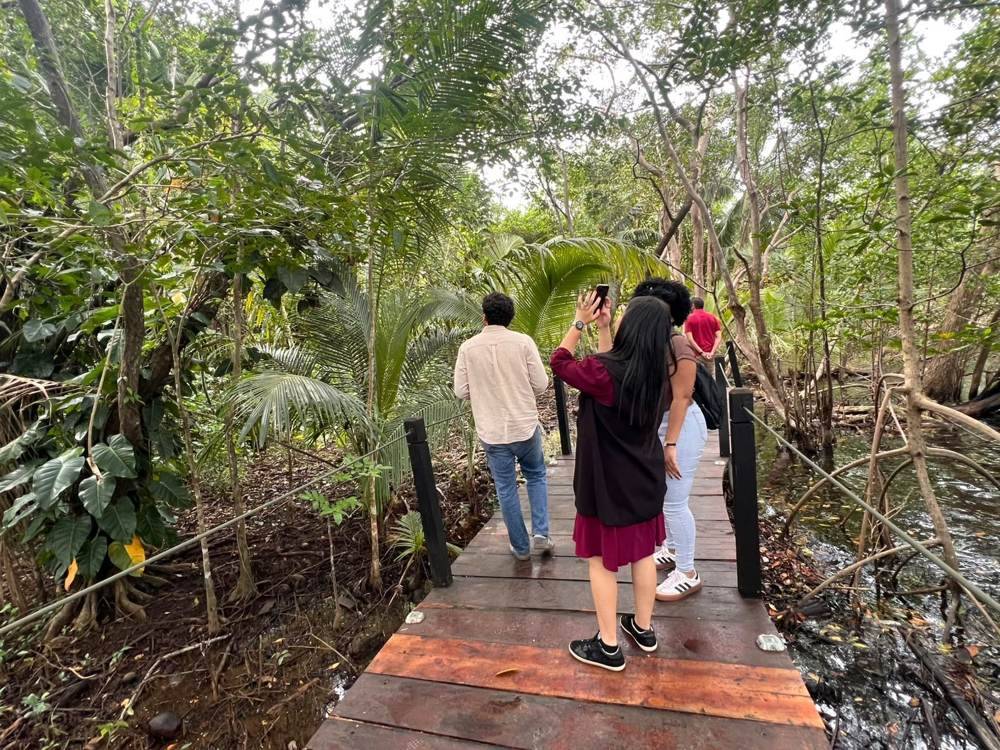
A busy October at Seahorse Point
October was a full and happy month. Our plant collection is now shared with botanic gardens around the world, and the UK Ambassador to Panama came to help us celebrate.
Our trees are getting new labels and signs, and our horticulture trainees have sat their exam after six months of training. We're so proud of everyone who made it happen.
A note from us: welcome to Seahorse Point. Thank you for being part of our story. Whether you've walked our trails, shared something from the outdoor kitchen, or are reading from far away, you're always welcome here.
Everything we do comes back to one simple idea: giving back in return, to the island, the ocean and the community who share them with us.
With warm wishes, Howard and Diane
Our plant collection goes global
Our plant collection database is now shared through Botanic Gardens Conservation International (BGCI), joining the records of botanic gardens worldwide. To find our garden's listing, search for Forest of Flavours on BGCI's GardenSearch.
Out on the trails, every tree is getting an accession label with its scientific name, family, common names and where it's native to. We're also adding mini signs that share what each plant likes, how people use it, and a "wow" fact or two.
Why it matters: knowing exactly what grows where, and sharing it, is how botanic gardens work together on conservation. No plant should have to go extinct.
Plants of the month
Each month we pick plants from our labelled collection to get to know a little better. Look for their labels next time you're on the trails.

Featured plant: swamp bloodwood
Pterocarpus officinalis · Fabaceae · sangrillo
Label 2026-0195 · Native to tropical America and the Caribbean
What it likes: wet feet. It grows in coastal freshwater and slightly salty swamps, on the land side of the mangroves and along stream banks. Its great buttress roots reach into airless mud where other trees can't grow.
Why this month: its yellow-orange flowers come in the rainy months, and the flat, winged fruits ripen from about August to October. Look for them now.
Wow fact: cut the bark and a deep red sap seeps out: sangre means blood. Its corky fruits float, and some drift so far at sea that they wash up on Florida's beaches.
Why it matters: the tree itself isn't endangered, but the freshwater swamp forests it anchors are under pressure from drainage and development. Next door in Costa Rica, they're counted among the most threatened ecosystems.
Find it: by the boardwalk in the wetland forest, the one in our cover photo. Look for label 2026-0195.
More from the collection

Nance · golden spoon
Byrsonima crassifolia
Native here and across tropical America. Its small yellow fruits are eaten fresh or made into drinks and desserts. Wow fact: its bark is rich in tannins and has long been used to tan leather.

Mango (heritage)
Mangifera indica
Wow fact: from South Asia originally, the mango belongs to the same plant family as the cashew and the pistachio.

Beach almond
Terminalia catappa
Wow fact: its leaves turn bright red before they fall. Like the swamp bloodwood's, its corky fruits float, so the sea carries them to new shores.
How to read our labels
Each tree's label tells you:
- its accession number, which is its record in our database
- its scientific name and plant family
- its common names
- where it's native to
The UK Ambassador comes to Seahorse Point
In October the UK Ambassador to Panama visited Bocas del Toro and spent time with us at Seahorse Point. Together we celebrated our plant collection being listed with Botanic Gardens Conservation International (BGCI), an international conservation charity based in the UK.
Our guests toured the gardens and forest trails, stopped in at one of our teaching spaces and took a rest up on the canopy net.


A taste of the garden
To mark the day, our outdoor kitchen team baked banana breads and muffins, made pineapple-coconut treats and brewed herbal teas, all using fruit and herbs from our own garden.


In flower now: lantana by the deck
Its bright orange flower heads are a favourite with butterflies. Look for them on your way in.
Exam day for our horticulture team
After six months of hands-on training with The Orchard of Panama here at Seahorse Point Nature Reserve, our horticulture trainees have sat their exam.
The training centres on creating a community organic garden. Growing food without chemicals helps on two fronts. It builds food security for the community, and it keeps fertiliser and pesticide run-off out of the ocean, where it harms our seagrass beds and coral reefs. Along the way, the whole team has learned new skills and shared them with each other.


Top of the class: Joel Miller, 96%
Joel finished as top student with 96%, and he now plans to go to university to study agriculture. Congratulations, Joel, and well done to the whole team.
Skills learned here and shared with the community: that's what giving back in return looks like.
Learning together: we start by asking
When we learn together about plants, how they're used and the knowledge that comes with them, we begin with consent. Seahorse Point follows a policy of free, prior and informed consent, a principle set out in the UN Declaration on the Rights of Indigenous Peoples.
- Free: given willingly, with no pressure, persuasion or rush.
- Prior: asked well before anything begins, with time to talk it over.
- Informed: everyone knows what they're agreeing to, how it will be used and who will see it.
Consent always includes the right to say no, or yes with conditions.
Why it matters: much of what we know about plants — what heals, what feeds and what grows where — comes from people who have lived alongside them for generations. That knowledge belongs to them. Asking first and respecting the answer means that sharing it helps the communities it comes from.
Come and see
Walk the trails, read the new labels and see the garden taking shape.
Explore the reserve: Rainforest · Forest of Flavours · Mangroves · Seagrass · Marine life
Afield & Afloat is published monthly by Seahorse Point Nature Reserve. Giving back in return. To get each issue by email, subscribe here.