
Forest of Flavours
The botanic garden of Seahorse Point Nature Reserve · Isla Bastimentos, Bocas del Toro, Panama
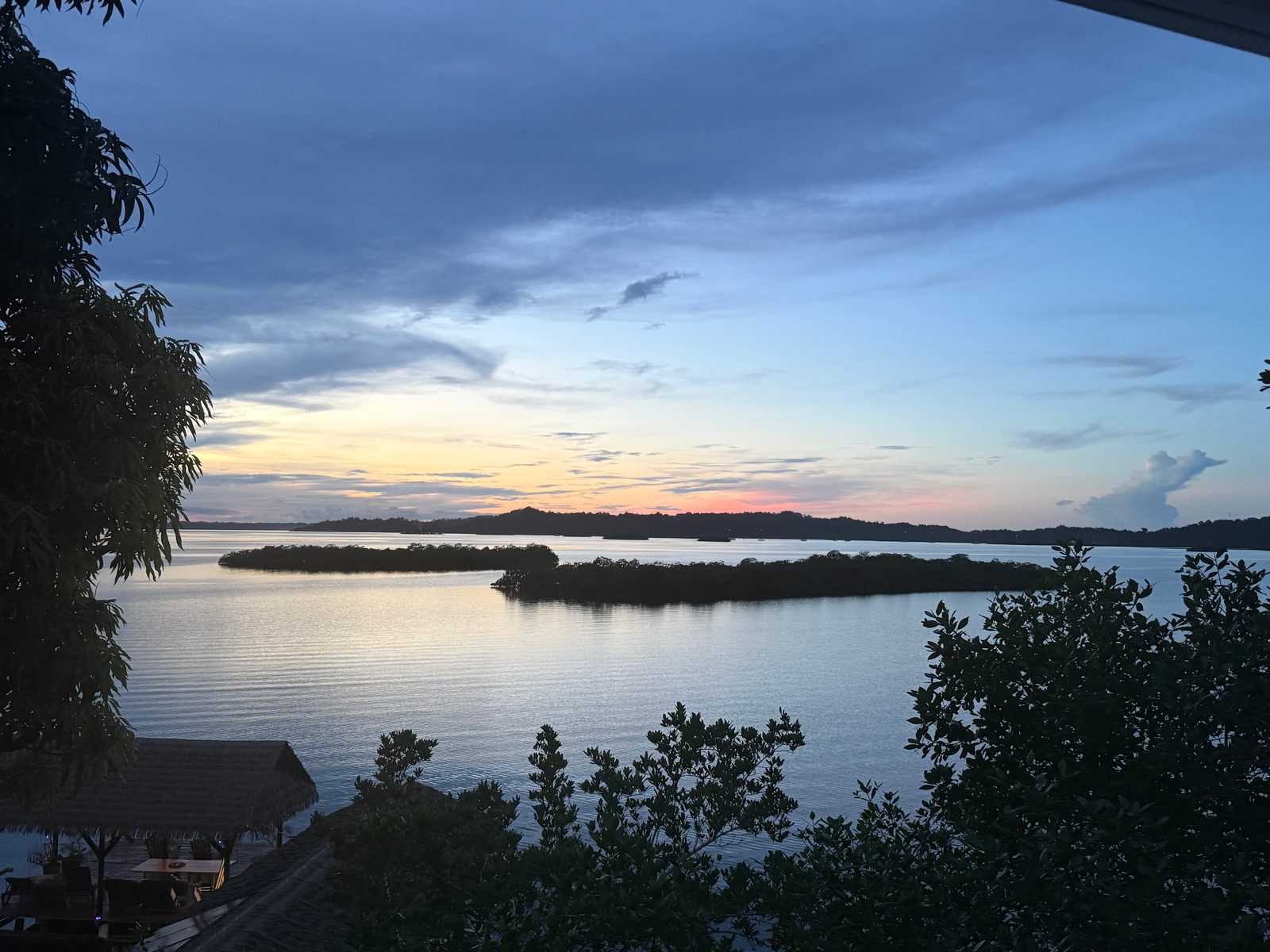
Dusk over the bay and its mangrove cays.
Step off the boat into a secluded island garden where 205 documented plants grow between rainforest and mangrove. Walk beneath century-old trees, and climb into a tree net strung between native canopy giants, each with its own story to tell.
Along the way, meet plants whose families outlived the dinosaurs, a ginger that grows its own shampoo, and quietly observe the sloths of the mangroves.
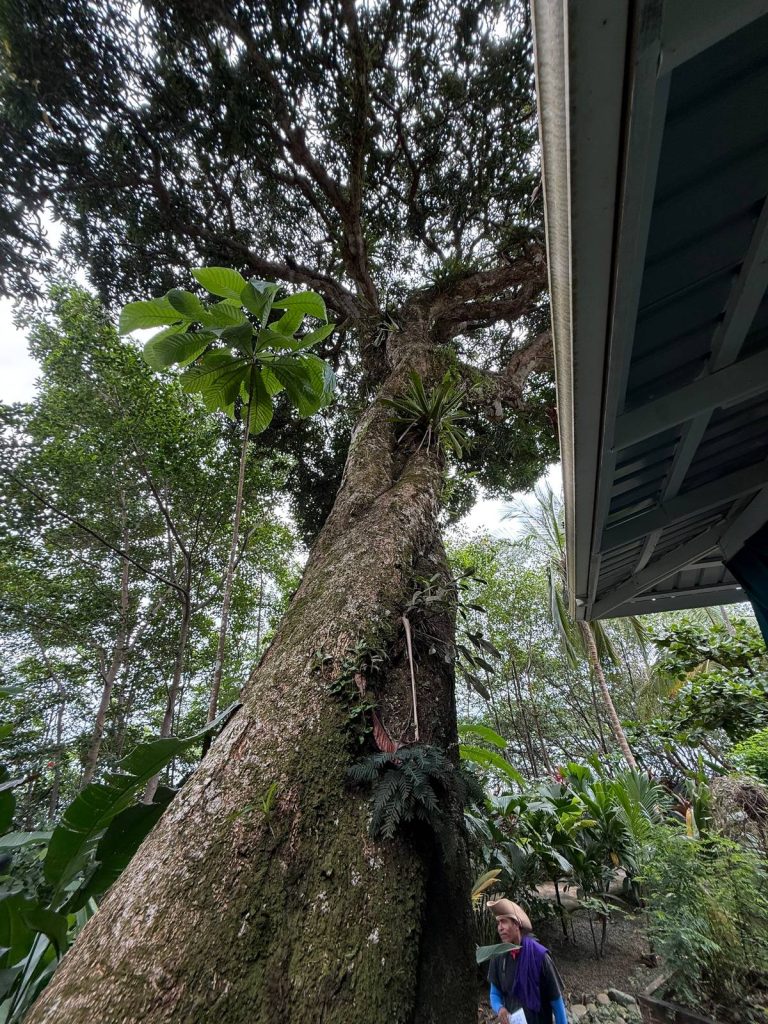
Meet the heritage trees
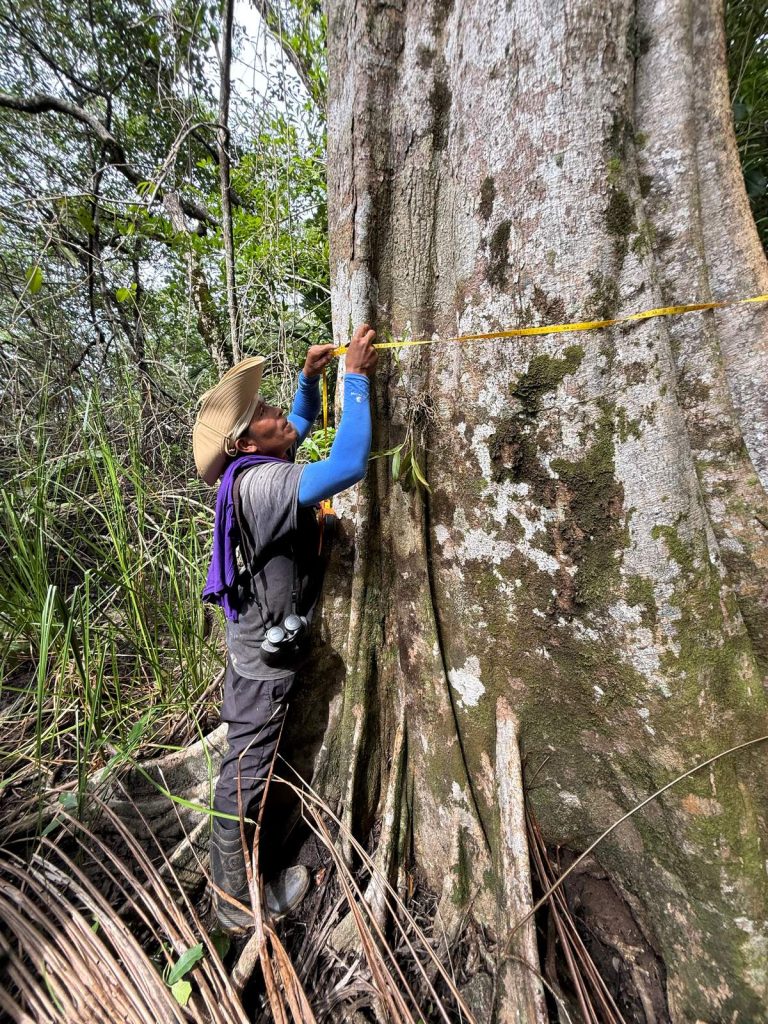
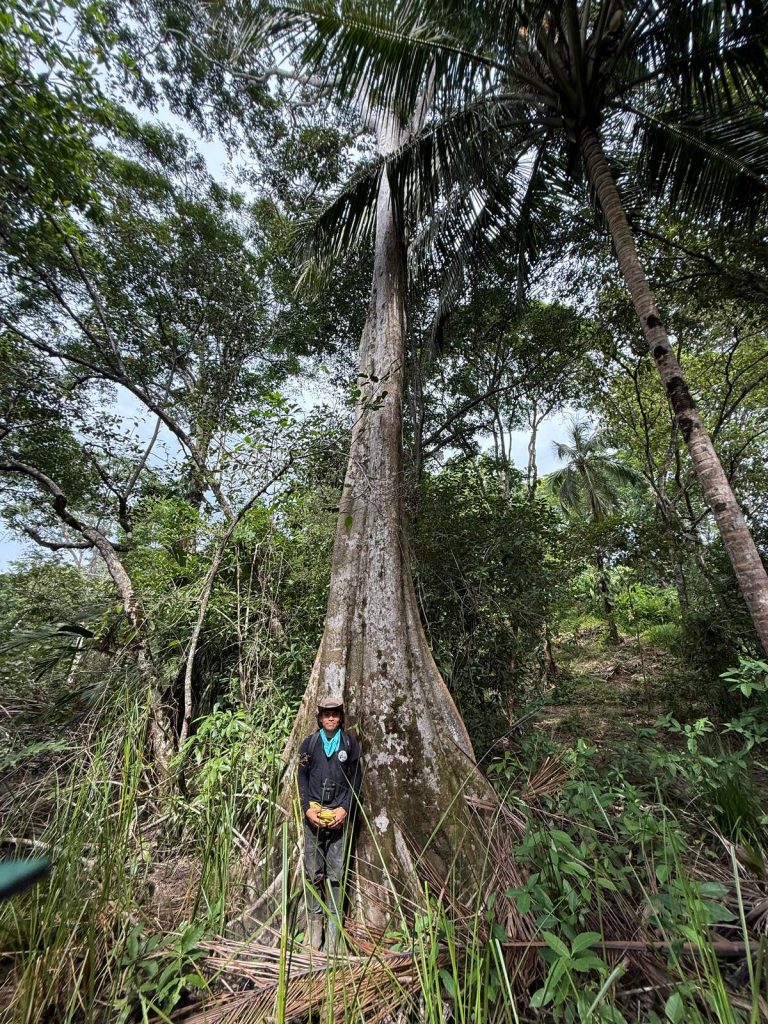
Some of our trees were growing here long before any of us. Stand beside one and you will see why we call them heritage trees.
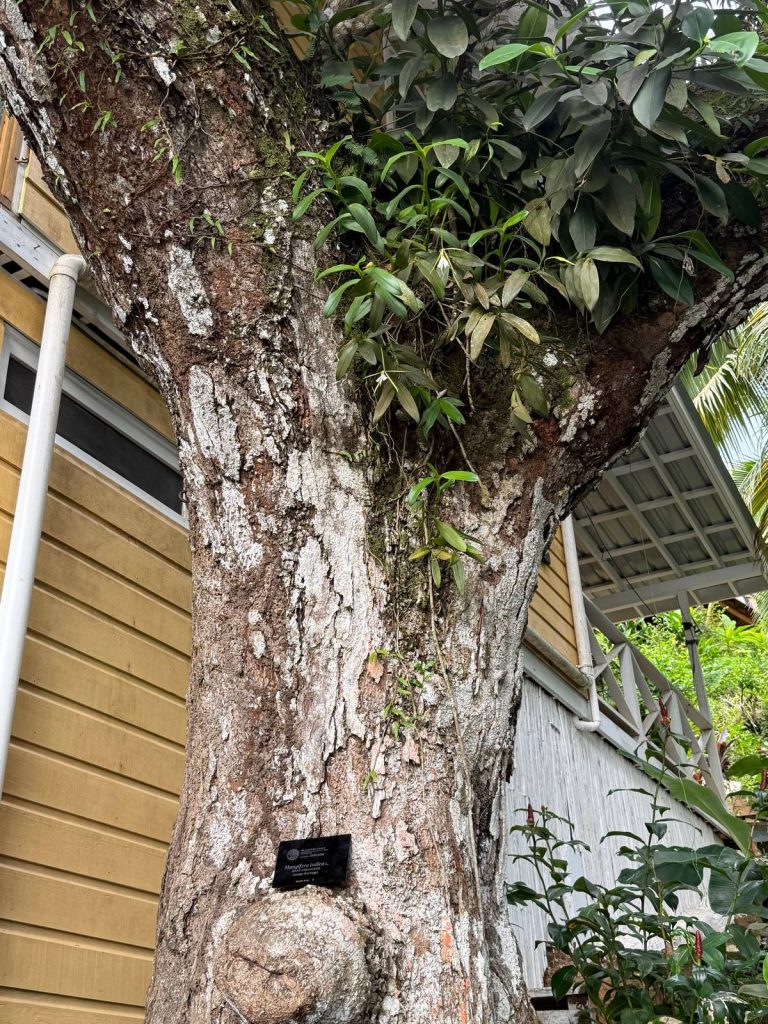
- Two century-old mangos. One stands by the Laboratorio, the other at the front dock below the yellow house. Mangos first came to the Americas from South Asia centuries ago, and these two have been fruiting here for around a hundred years.
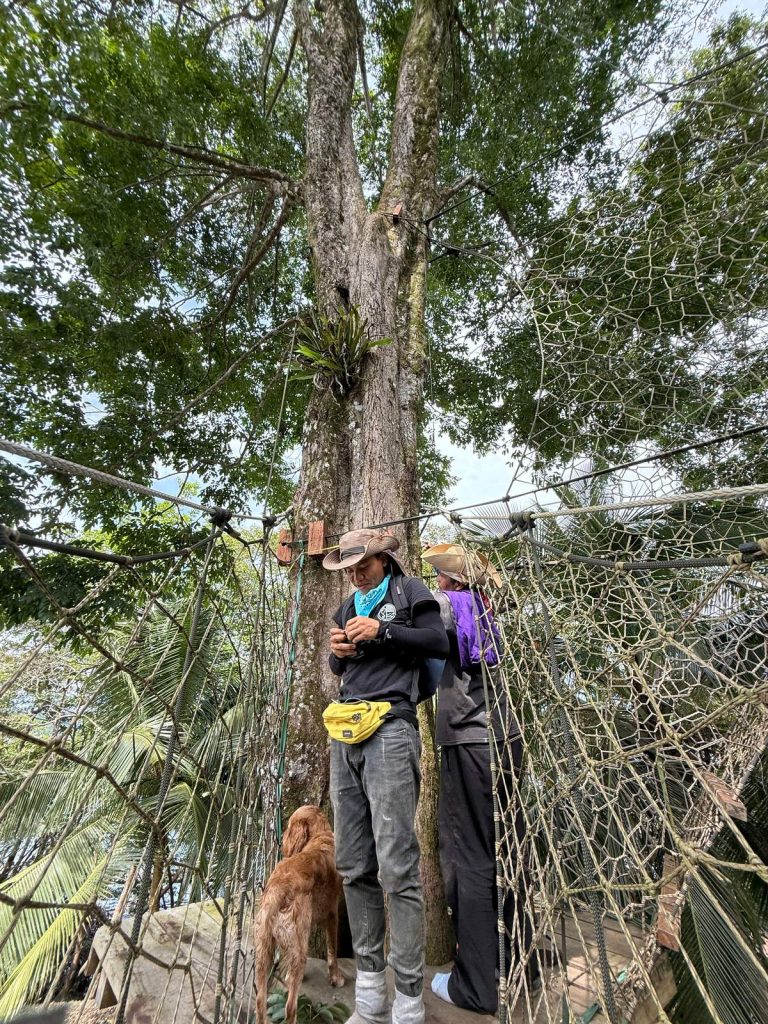
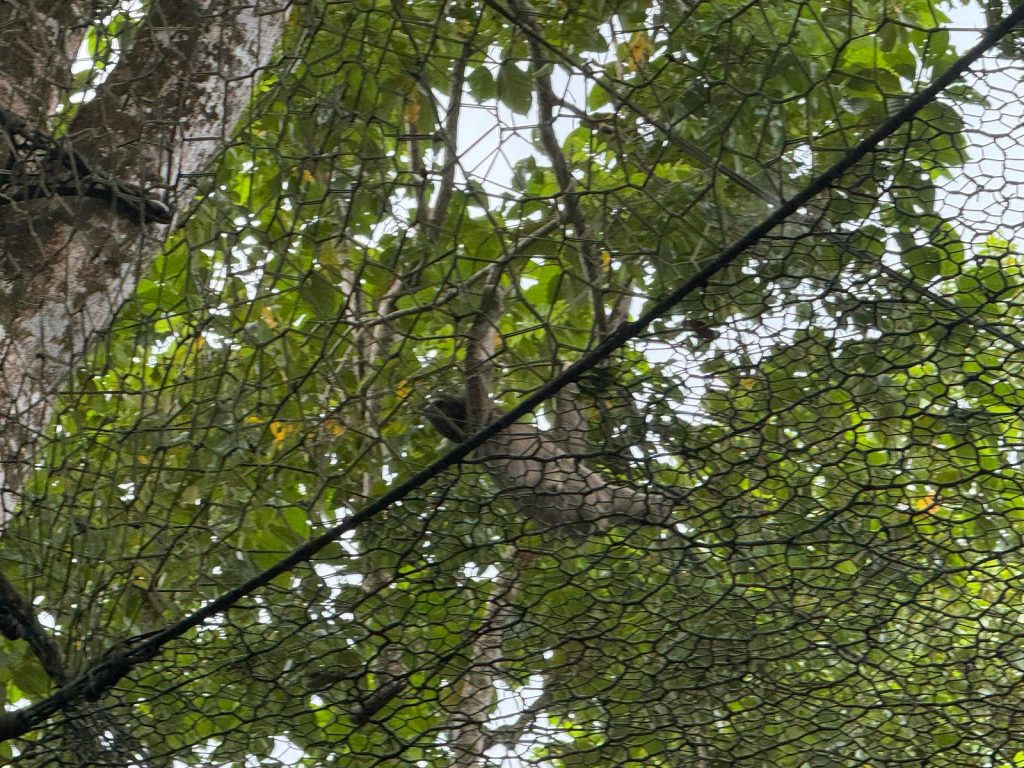
- The tree-net giants. On the ridge, a jobo canopy giant and a bloodtree hold up our tree net. Climb in, look around and ask yourself: how did they manage to grow so big? The jobo's small yellow plums feed birds, animals and people alike.
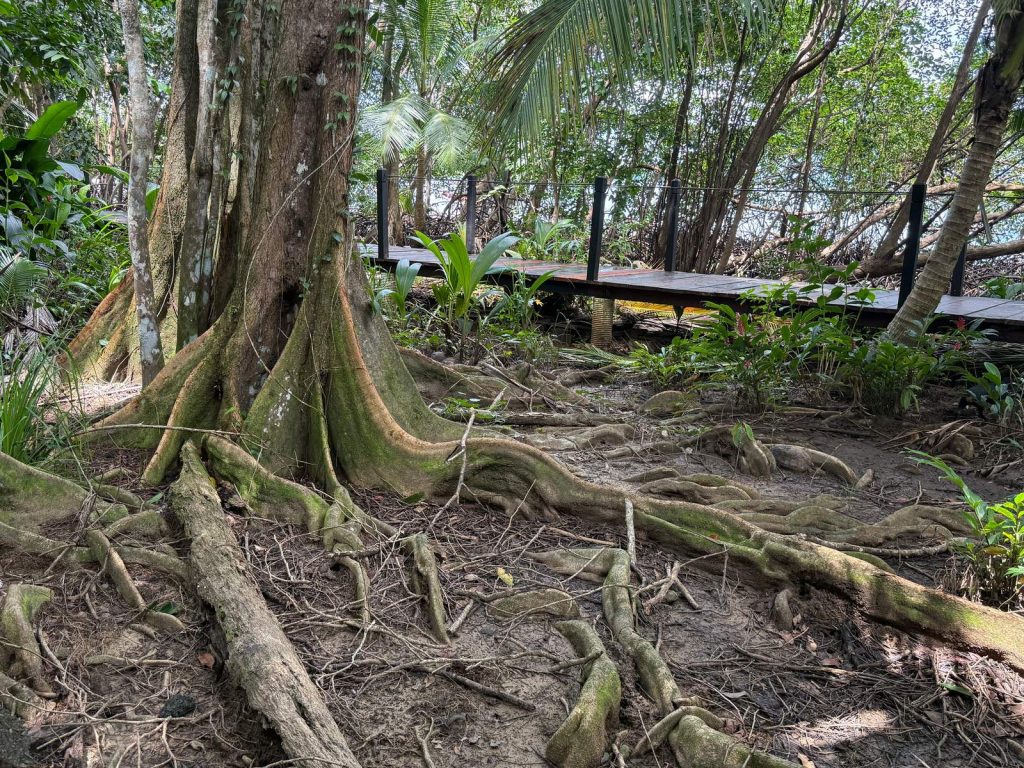
- Swamp bloodwoods (sangrillo). Estimated at 50 to more than 100 years old, they are dotted all around the nature reserve. Where the bark is wounded, a blood-red sap seeps out, which gives them their name, and great buttress roots hold them steady in wet ground.
- The beach almond. It shades the Seagrass Café, and our two-toed sloths come to visit. Watch for its big leaves turning red before they fall.
Walk the garden
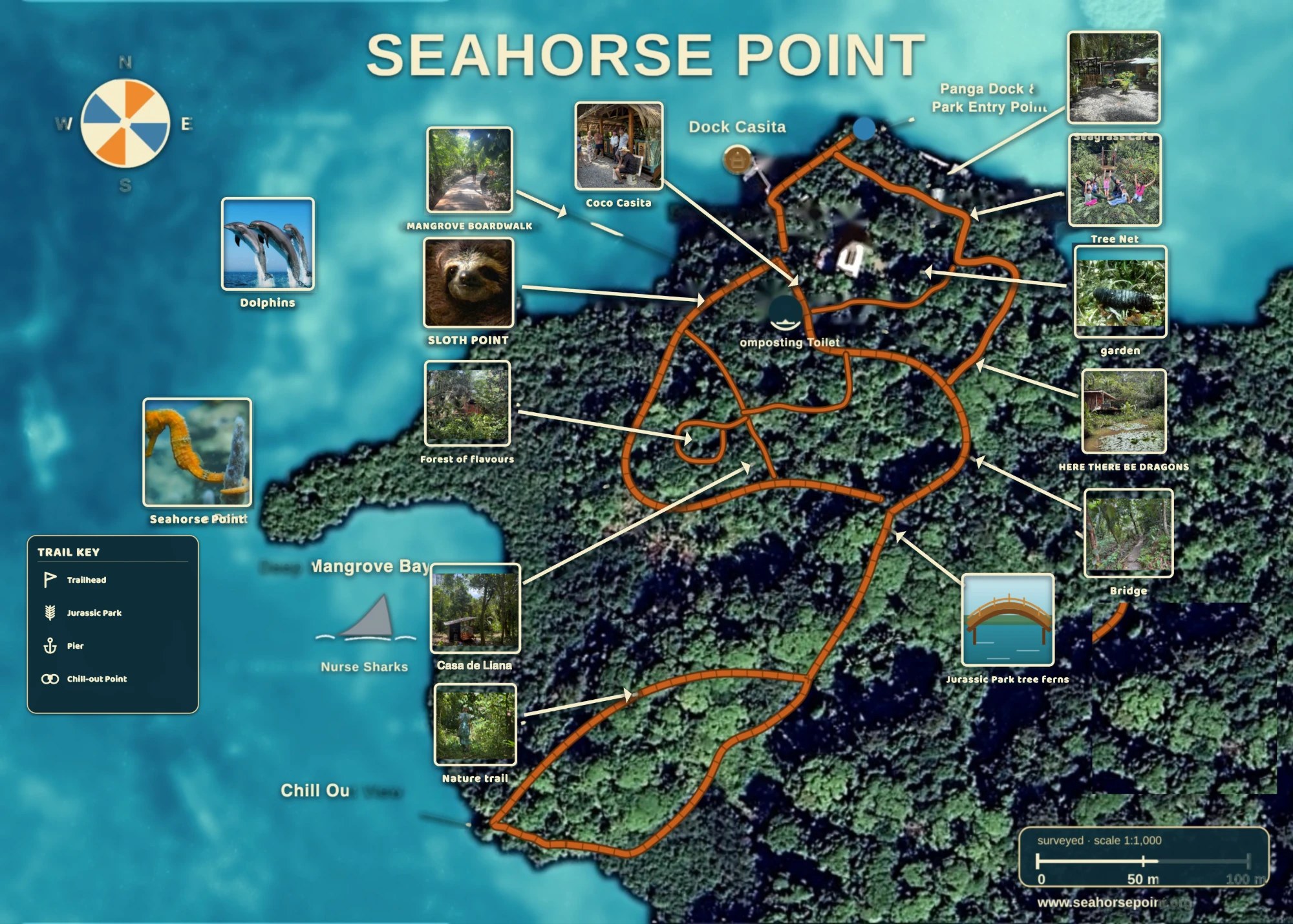
Pick up your pass from the Seagrass Café and follow the trails through the garden, forest and mangrove. Look out for:
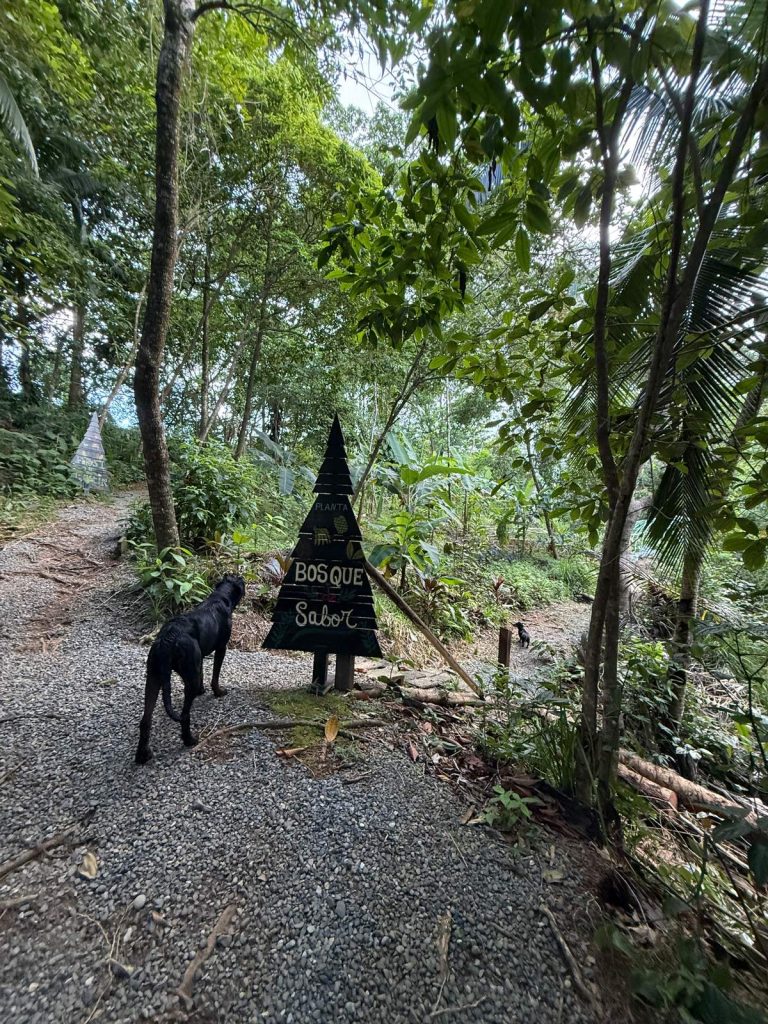
- Food Forest: fruit trees have been planted to provide food for wildlife and pollinators. They are from across the tropics, including jackfruit, star fruit, jaboticaba, mamey sapote, achiote, Ceylon cinnamon and blue Java bananas. In the Casa de Liana you will find a range of books where you can sit and read in more detail and enjoy some quiet time observing wildlife that regularly visits the area.
- Ginger Hill: beehive and shampoo gingers, red and pink powder-puff calliandras, and pitanga cherries.
- The Terrace: lemongrass, papaya, pineapple and the pili nut wrap around our herb area.
- Sloth Walk: shell ginger and the rose-apple tree (read its special story) along the path. Keep looking up.
- The Jurassic Park tree ferns: near the bridge. Their family was already growing in the age of the dinosaurs (more below).
- The mangrove boardwalk: 200 feet into the mangroves, home of our three-toed sloths.
Taste the forest
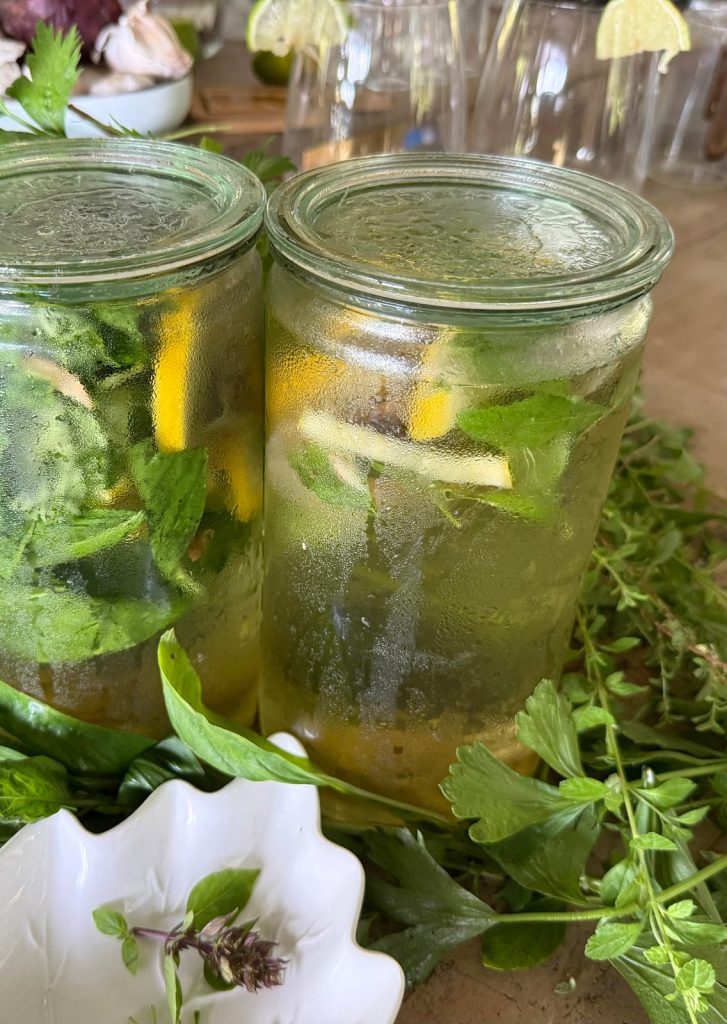
Taste the garden through our teas: at the Seagrass Café or in the Heliconia Lounge. Our curated tea sommelier activity provides four cold-infused flights of flavour, made with fresh herbs, leaves and flowers and even bark.
Coming soon: our Bocas Cacao Bonbons and a wine tasting, with a non-alcoholic version being researched too.
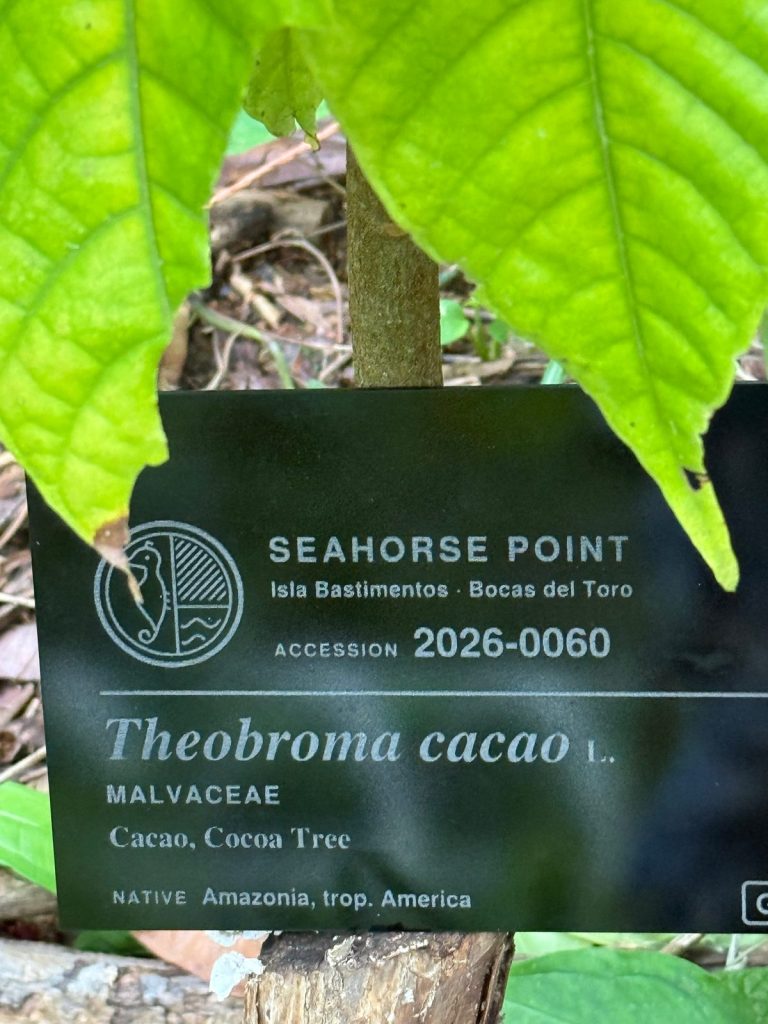
Our own food forest is one of our soil and forest restoration projects and is still young, with cacao, jaboticaba, mamey sapote, breadfruit and Ceylon cinnamon growing towards their first harvests.
Heliconias and gingers
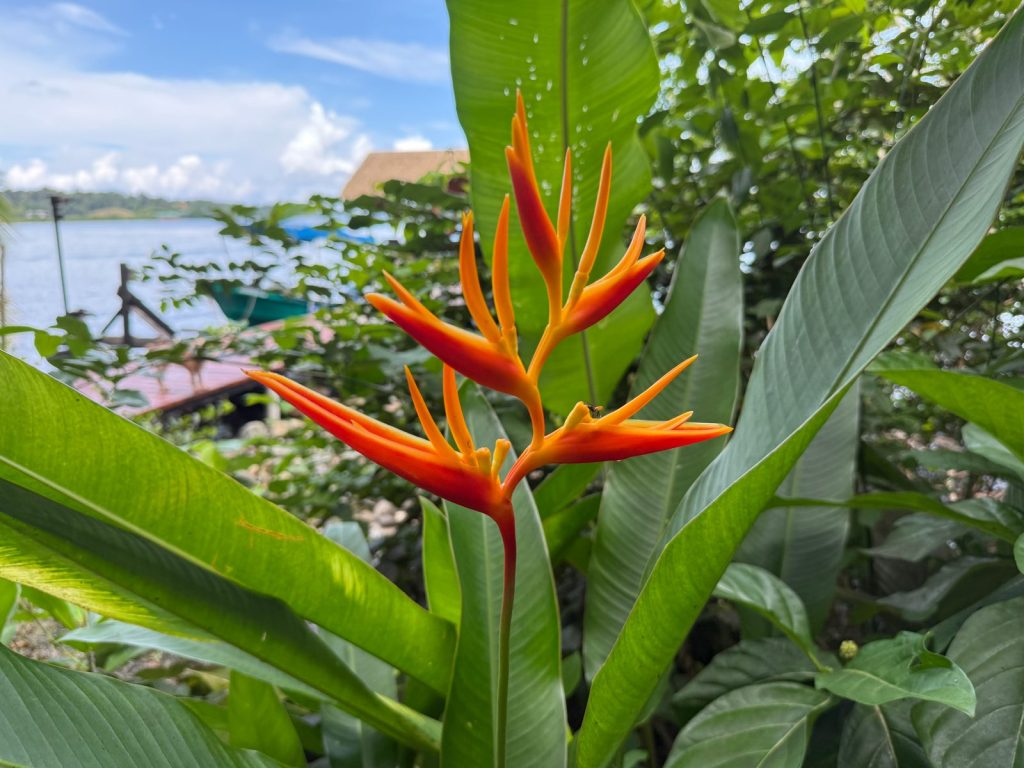
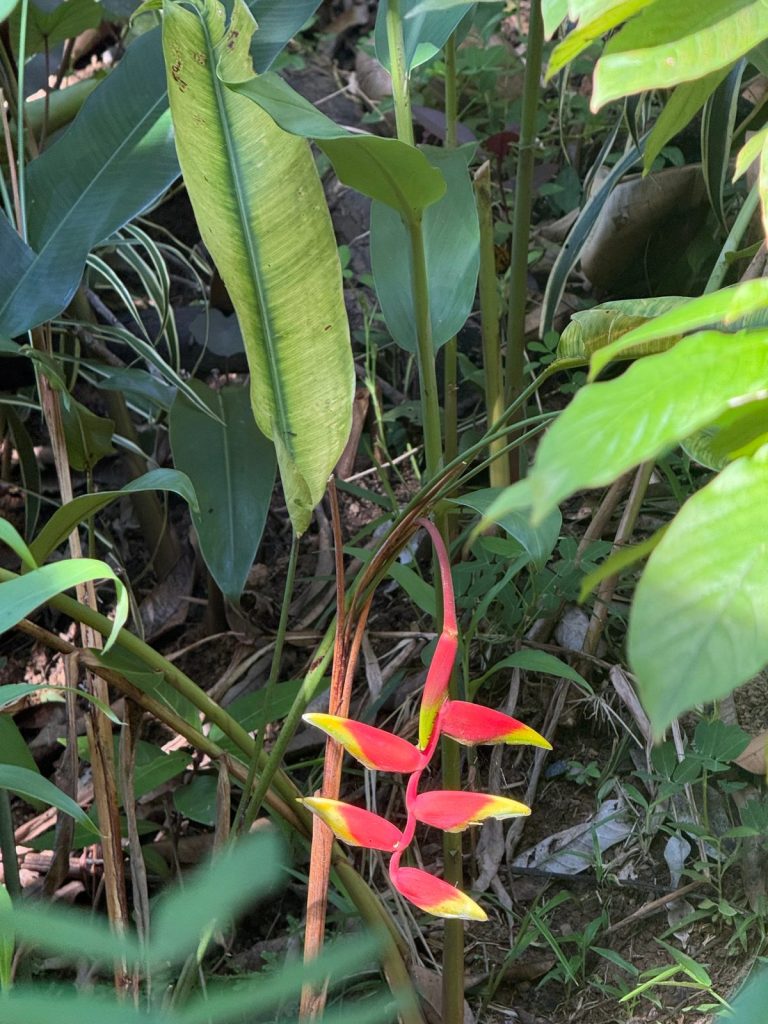
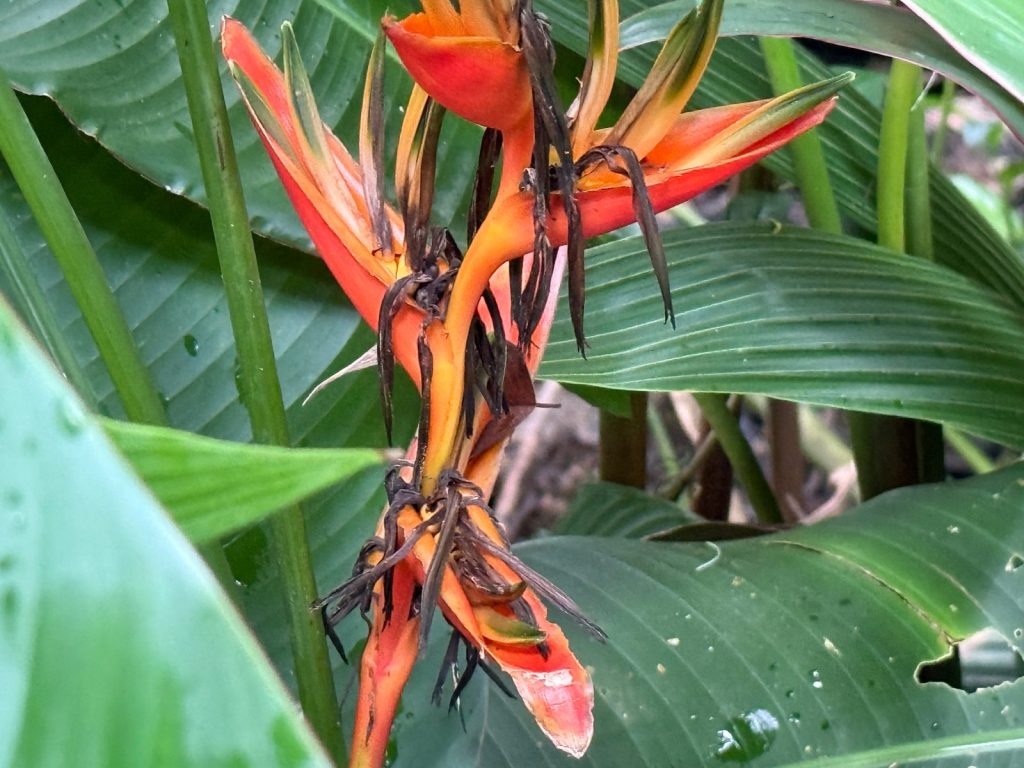
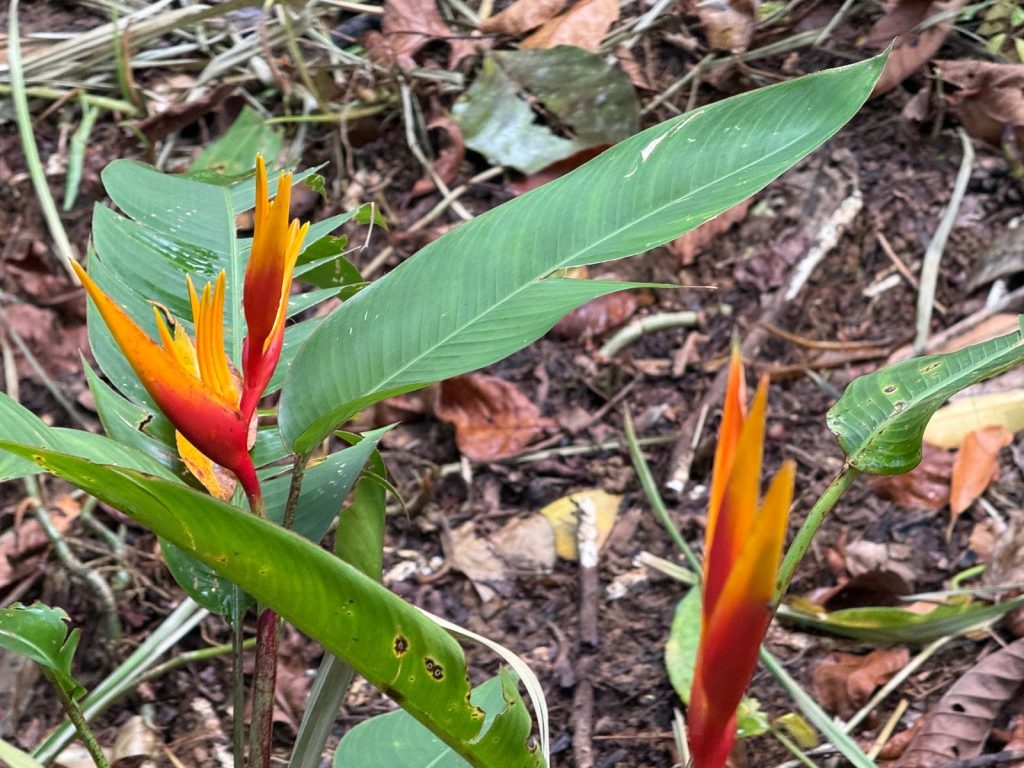
Nine kinds of heliconia, the platanillos, flower here, alongside gingers and spiral gingers (Costus). Six of our plants came from Carla Black, World President of the International Heliconia Society, and grow by the blue casita stairs at the Nectar Bar at the top of the hill in the food forest area.
What looks like the flower is really a bract: a brightly coloured leaf that shelters the small true flowers inside. Hummingbirds come for the nectar and carry pollen from plant to plant. To feed on the nectar, they have to fly upside down.
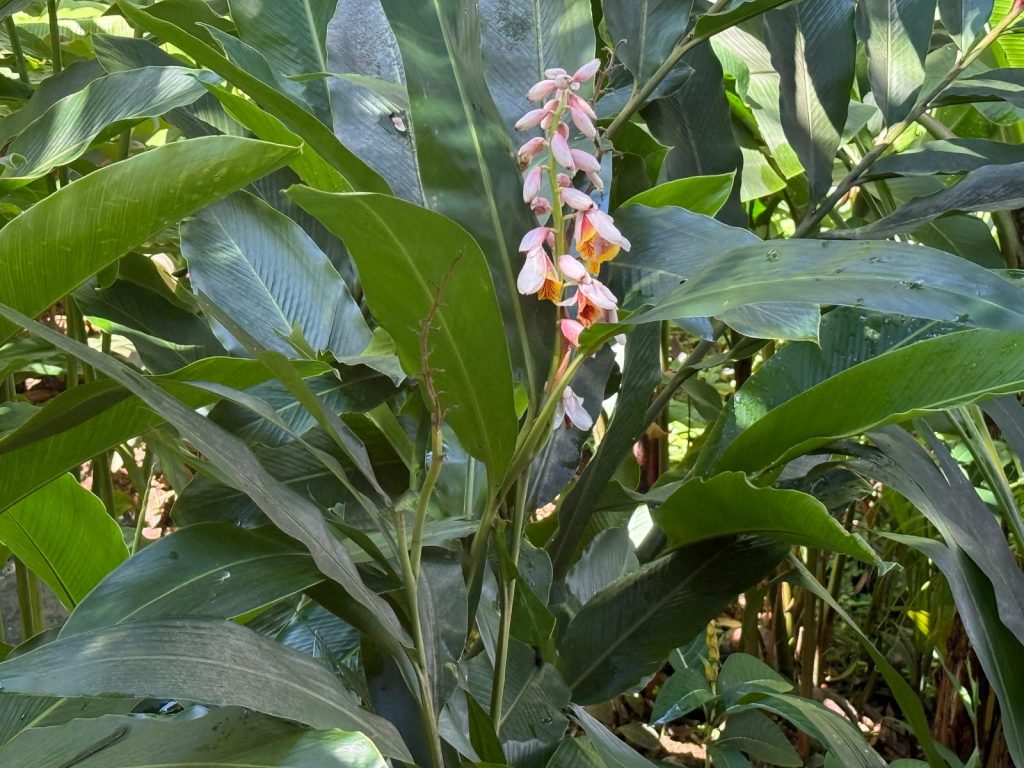
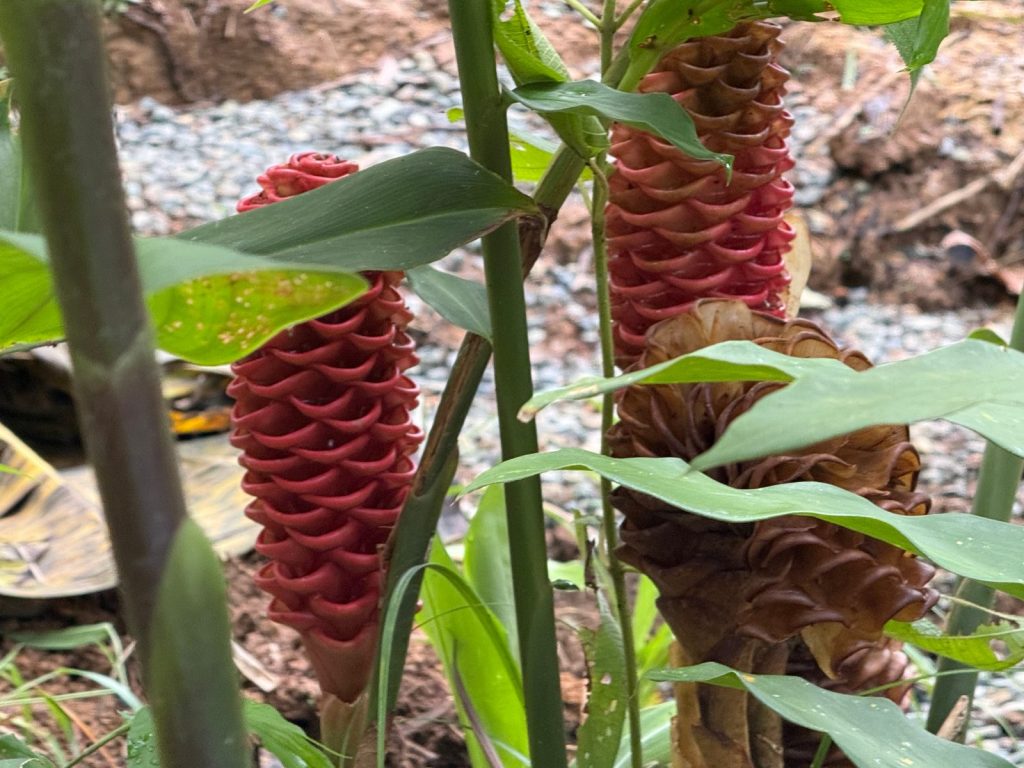
The gingers are just as showy: shell ginger, named for its pearly, shell-like buds; beehive ginger, with tall cones of waxy red bracts; and the spiral gingers, whose leaves spiral up the stem.
Flowering now: shampoo ginger
Ditch the Plastic
Shampoo, conditioner and hand cream, growing in plain sight.
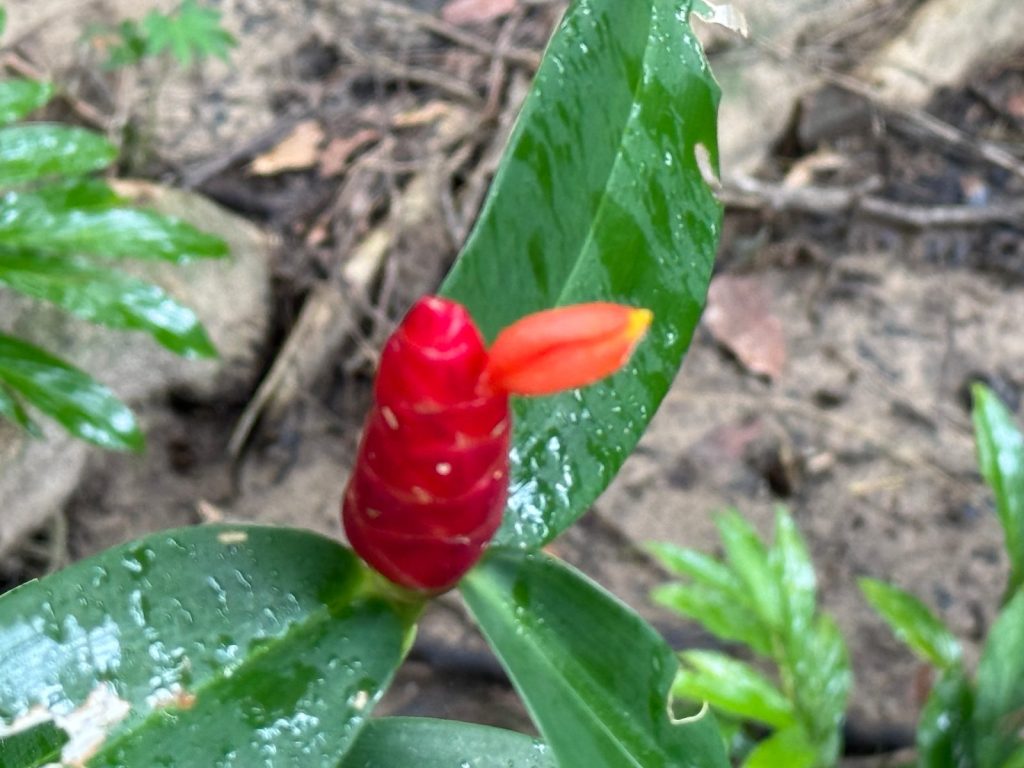
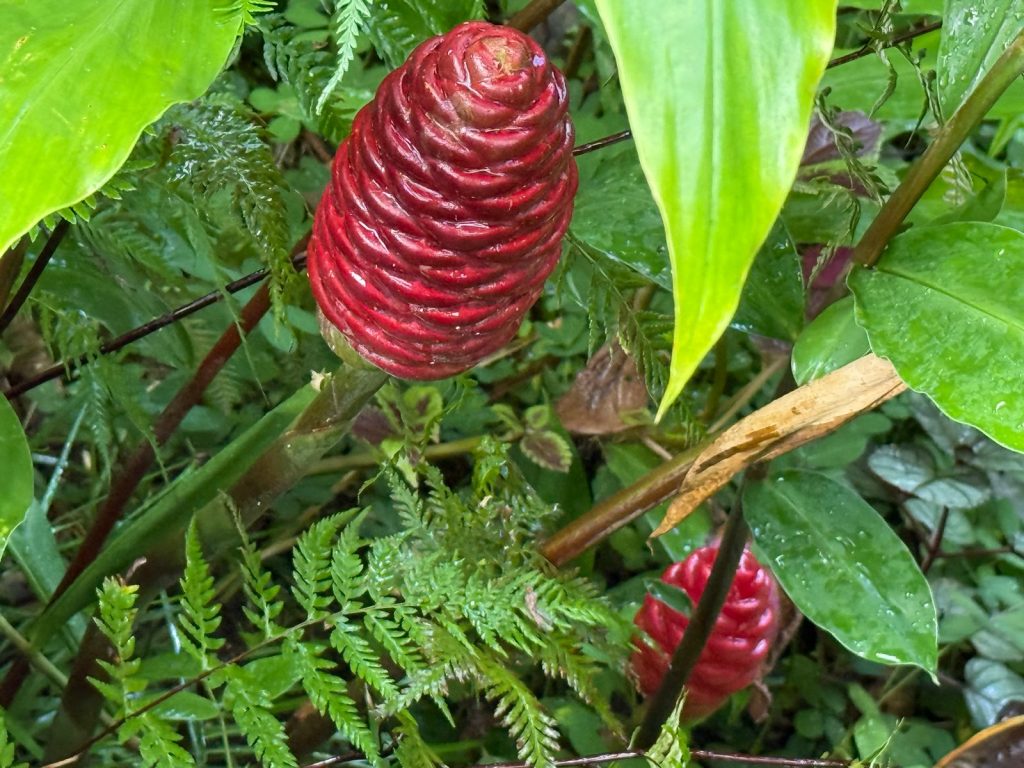
Squeeze a ripe red cone of shampoo ginger and out runs a clear, fragrant gel that people have used for generations to wash and condition their hair and to soften their hands. No plastic bottles purchased. Look for the “Ditch the Plastic” sign by the plant and ask your guide to show you how.
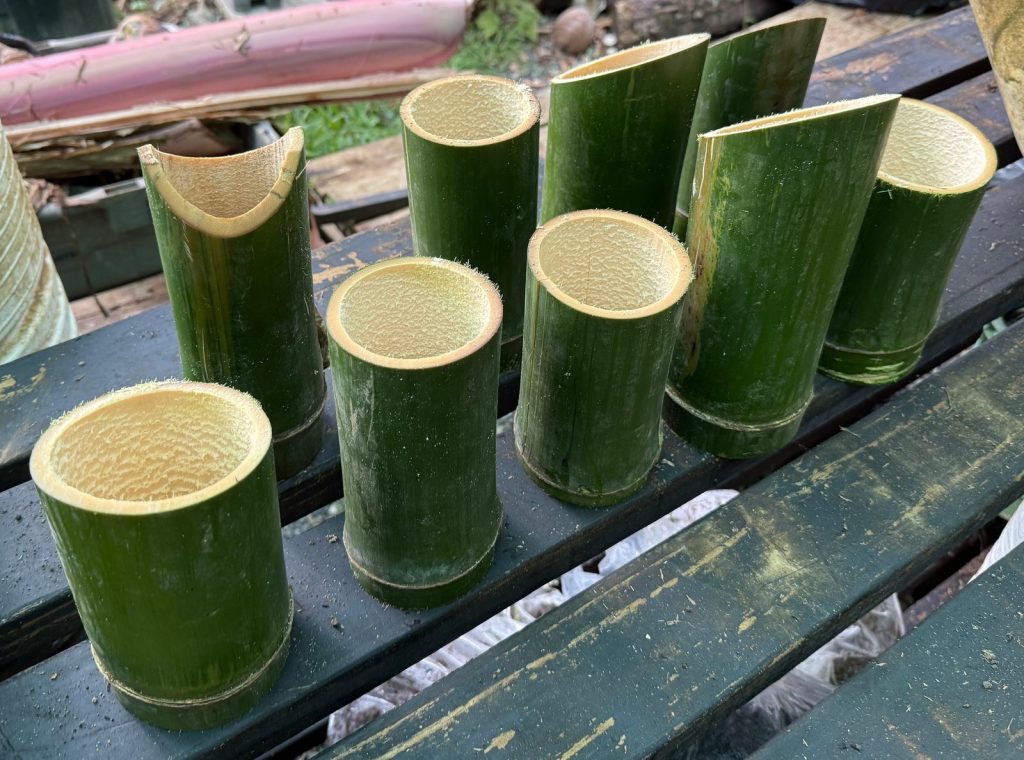
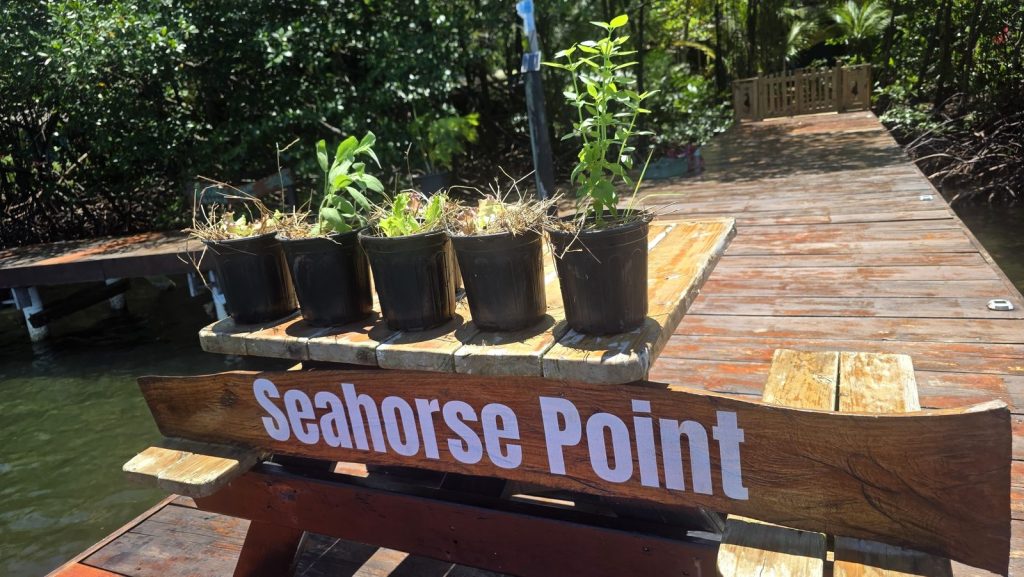
Our nursery is ditching plastic too. Hundreds of thin plastic pots pass through gardens this size, and the strong sun and salty conditions mean they break down and microplastics can end up in the sea. So, we are moving our seedlings into pots made right here: bamboo first, then coconut, banana leaves and slices of banana stem. All are made from what the garden grows, and all go back into the soil.
The bamboo was donated by a member of our team, and making the pots is helping one of our Indigenous team members start a small local business.
Ferns: plants that outlived the dinosaurs
Ferns are one of the reserve's special features.
Some of the quietest plants in the garden have the longest stories. Our spiny tree ferns, the Jurassic Park tree ferns on the trail map, belong to the scaly tree fern family, which goes back to the Jurassic, more than 145 million years ago. Their ancestors unfurled their fronds while dinosaurs walked beneath them.
Then, 66 million years ago, an asteroid struck the Earth and the age of the dinosaurs came to an end. Ferns were among the first plants to grow back across the devastated land. In rocks laid down just after the impact, fern spores suddenly outnumber almost everything else: scientists call it the fern spike.
Look for:
- Tree ferns (Cyathea): by the bridge. Look for their tightly coiled fiddleheads and the spines on their stems.
- Filmy fern (Trichomanes): its fronds are only one cell thick, so fine you can almost see through them. Filmy ferns have been around for more than 200 million years, since at least the Late Triassic, when the first dinosaurs appeared.
- Mangrove fern (Acrostichum aureum): one of the few ferns that can grow with its feet in salty water, along the edge of the mangroves.
Ten different ferns are recorded in our collection so far, from tree ferns to little ferns that creep up tree trunks, and many more grow wild across the reserve.
Not a fern, but just as ancient: our white water lily (Nymphaea ampla). Water lilies are one of the oldest branches of the flowering-plant family tree. Fossil water lilies 115 to 125 million years old have been found in Portugal, so they were already in bloom in the age of the dinosaurs.
Ask your guide: how did ferns survive when the dinosaurs did not? A clue: think of tiny spores carried on the wind, and stems hidden safely underground.
Three kinds of mangrove
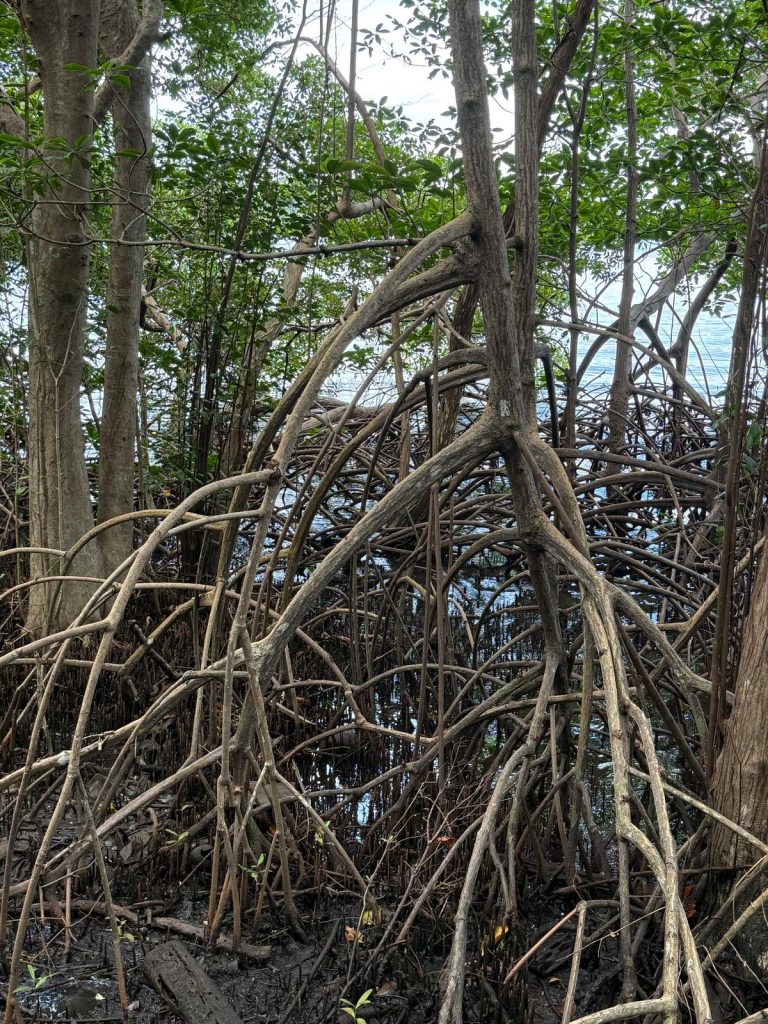
Red, black and white mangrove, with buttonwood on higher ground, fringe the nature reserve. Red mangrove stands on arching stilt roots; black mangrove pushes pencil-like breathing roots up through the mud; white mangrove and buttonwood grow nearer the land. Together they shelter young fish, protect the shore from storms and store carbon in their mud.
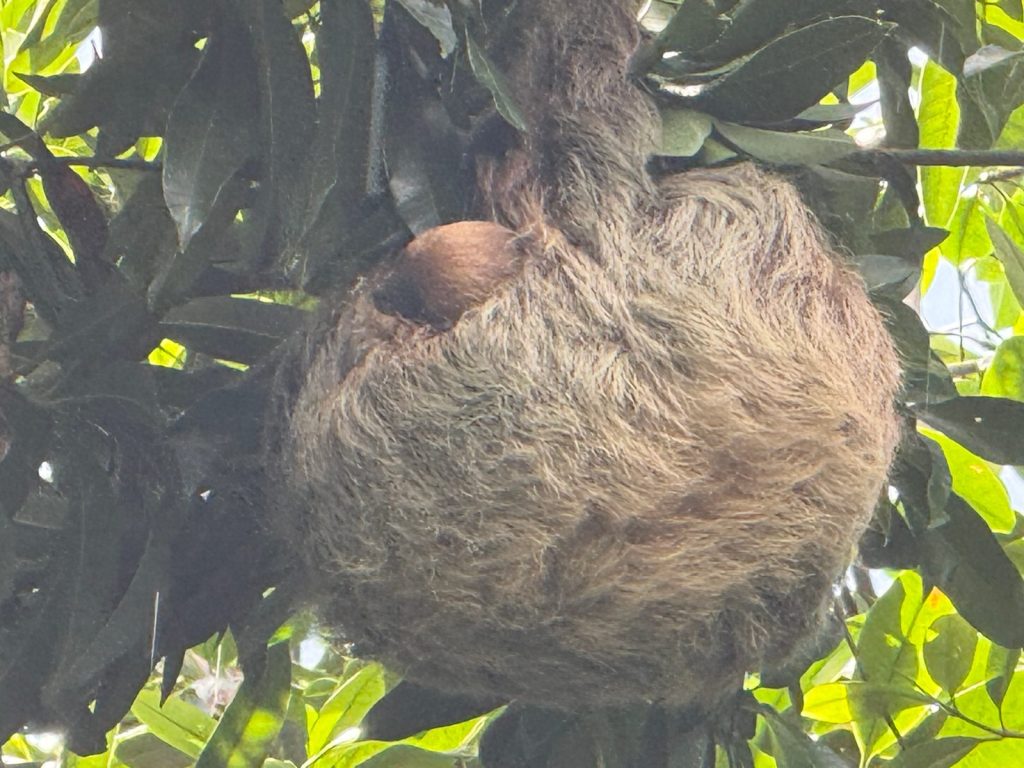
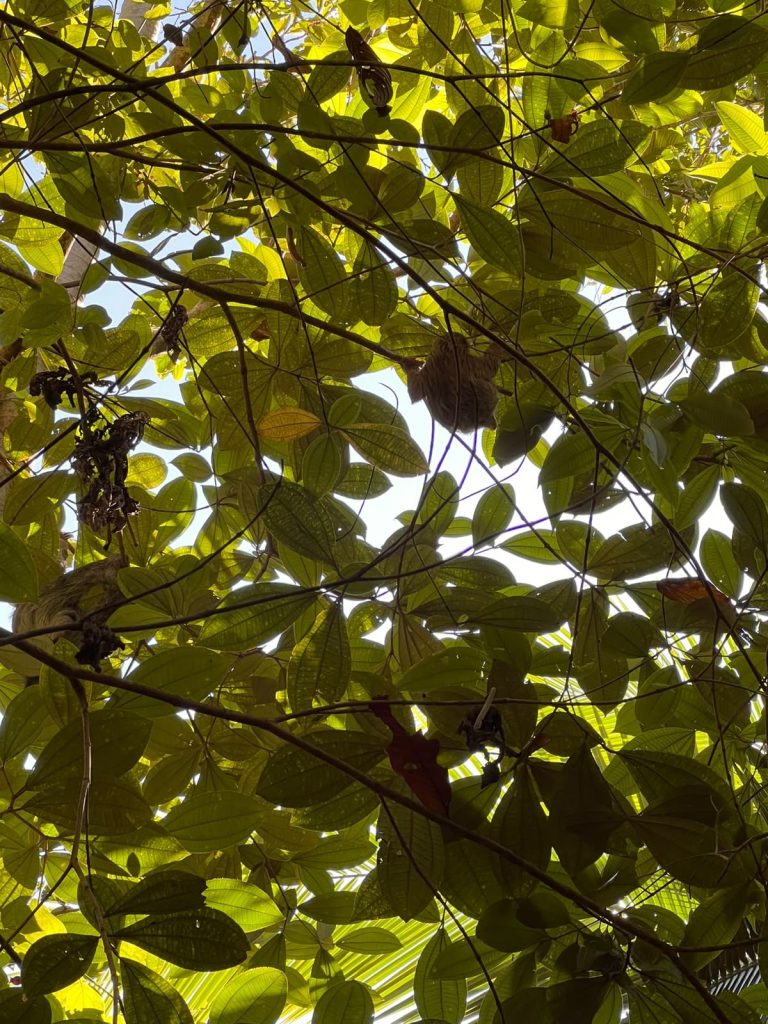
Walk our 200-foot boardwalk into the mangroves to meet the three-toed sloths that live there.
Sloth news, October 2026: two babies seen in a single day!
Young explorers
- Tree Detectives (ages 8–13): crack the Case of the Look-Alike Leaves. Young detectives follow the clues, uncover the secret maths of plants and file their evidence in a real herbarium.
- Dinosaur plant hunt: find the tree ferns, the filmy fern and the water lily: plants whose families were already growing in the age of the dinosaurs.
- The tree net: climb in, high among the branches of the canopy giants.
135 children have already joined our Biocultural Nature Camp. Schools and groups are welcome by appointment.
Science you can join
- iNaturalist: photograph what you find and add it to our project, seahorse-point. So far: 87 species and 136 observations.
- Herb research: our two-year Bocas del Toro Tropical Herb Viability project (2026–2028) will test which herbs really grow well here in our coconut coir, with the first sowings in early 2027. The results will become a new Bocas del Toro Herb Guide.
- Natural dyes: our guide Colours of Seahorse Point (PDF) shows how to make a soft yellow, a bright gold, an earthy brown and a deep blue from plants in the garden.
Explore all 205 plants
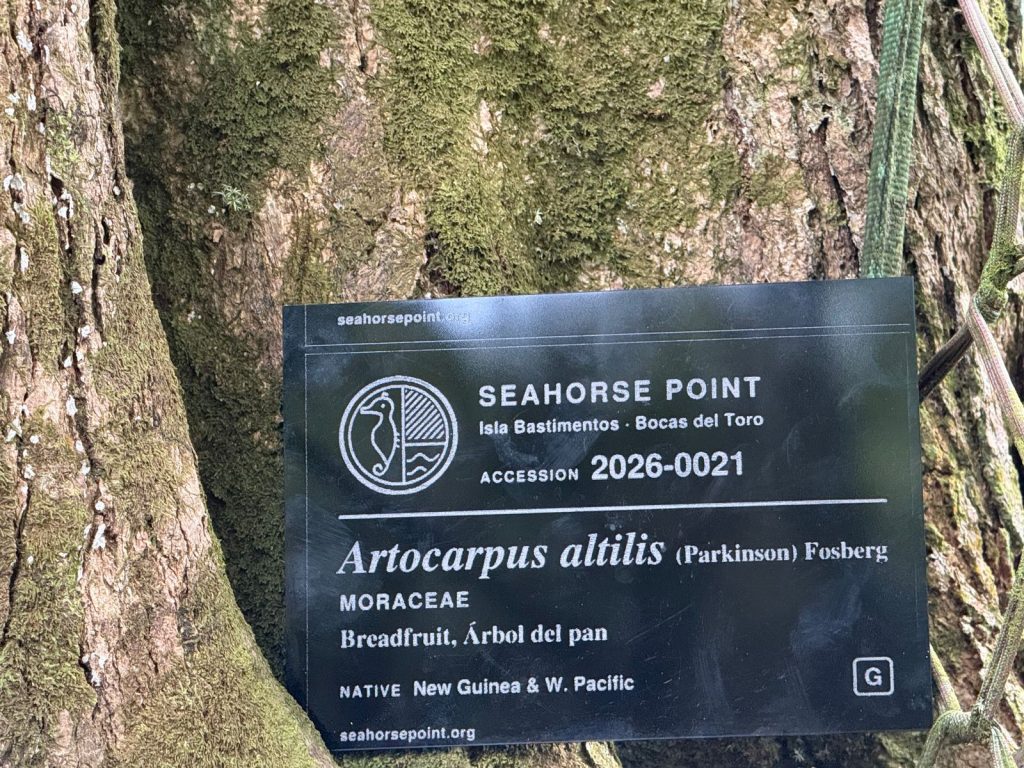
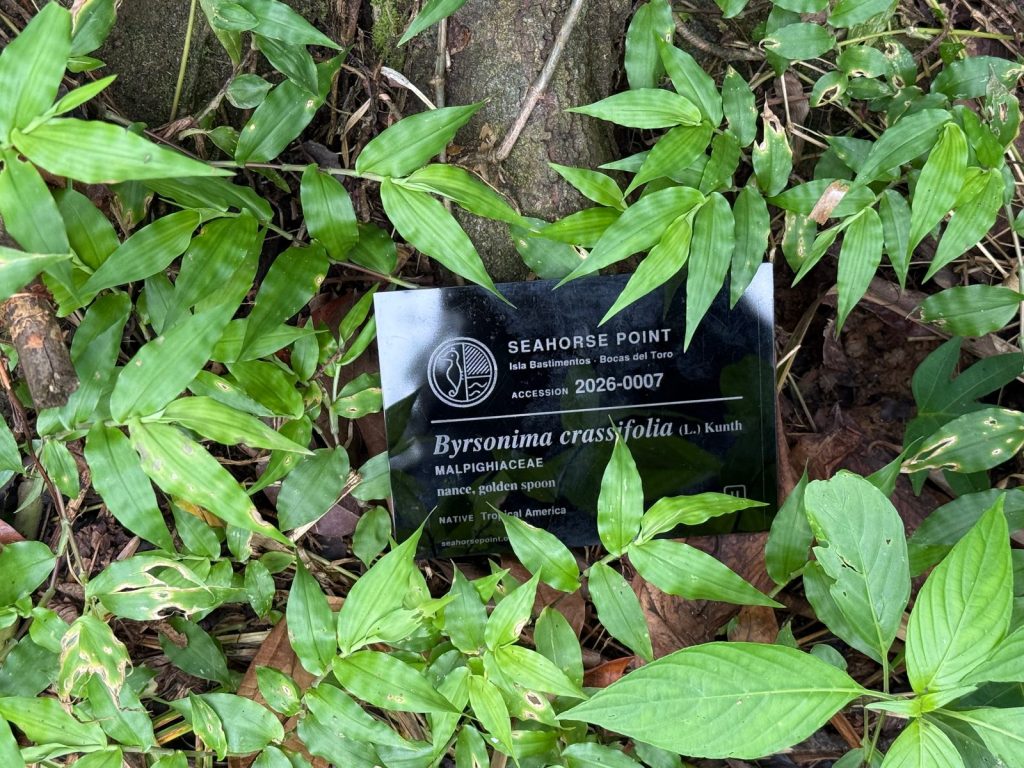
Every plant in the collection has its own accession number. Spot a number on a plant label? Look it up in our living collection: all 205 accessions, with their names, families, origins and where they grow. Our garden also has its own page on BGCI GardenSearch, the global database of botanic gardens.
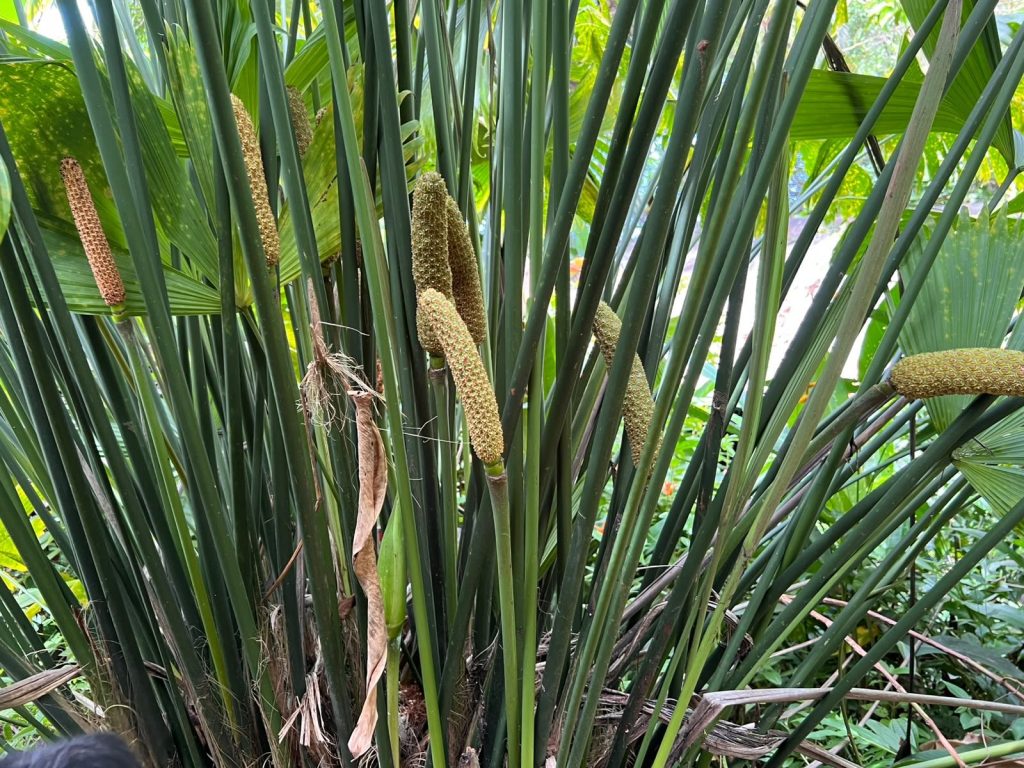
Fun find: the Panama hat plant (Carludovica palmata), flowering beside the spiny tree fern.
Panama hats are woven from the young leaves of this fan-leaved plant, but not in Panama: they are made in Ecuador. They took the name because they were shipped through Panama and worn by the workers who built the Panama Canal, and in 1906 President Theodore Roosevelt was photographed wearing one at the canal. Look for accession 2026-0185.
Botanic garden · BGCI institutional member 6206
A botanic garden that does not stop at the shoreline
A British-founded botanic collection that does not stop at the shoreline — registered with Botanic Gardens Conservation International, running from rain forest and mangrove into seagrass and the plankton beyond it, and holding seven IUCN Red List species on land and in the water. It employs and trains five Ngäbe-Buglé people, puts one of them through university, and has done all of it out of its own trading income.
01What we are
- BGCI institutional member 6206 · GardenSearch 7274 · 190 taxa, listed on BGCI GardenSearch.
- 205 documented accessions, around 190 taxa across some 80 plant families, over a hundred of them native and growing where they always have.
- Three forest systems meet within walking distance — rain forest, mangrove and seagrass — beside the Bastimentos Island National Marine Park.
- A working marine laboratory. Off-grid on solar. All water collected as rain and filtered on site to 0.03 micron. Cleaning products made here.
02Seven Red List species
Six IUCN Red List tree species, identified on site by Lider Sucre, former IUCN Councillor for Mesoamerica:
| Tree species | IUCN status |
|---|---|
| Mouriri completens | Endangered (EN) |
| Zanthoxylum panamense | Endangered (EN) |
| Cedrela odorata | Vulnerable (VU) |
| Dipteryx oleifera | Vulnerable (VU) |
| Ouratea prominens | Vulnerable (VU) |
| Spachea correae | Near Threatened (NT) |
Two seahorse species in the meadow, photographed here: Hippocampus erectus, Vulnerable, and H. reidi. Both CITES Appendix II. That makes seven Red List species on one site.
03What we found
Our own marine research found that a product widely recommended for organic pest control interfered with the moulting of copepods — the plankton in the water below us, and the same plankton we put under a microscope for visitors.
“Approved for organic use” does not mean “harmless in salt water”.
We now work to a reef-safe input standard that goes beyond organic certification, because this land drains directly into mangrove, seagrass and reef. It is a method other coastal gardens could adopt.
04Our people
Four Ngäbe-Buglé staff from Bahía Honda, who gained practical horticulture certificates this year and are qualifying as conservation educators. A fifth volunteers while we fund his university degree.
The traditional plant knowledge we use is credited to the community it comes from, under a signed consent policy, and the people who hold it are paid to lead the sessions that use it. None of this has been grant funded.
05Where we are now
An accreditation application sits with BGCI, who are British, ahead of their reopening in March 2027.
We are building the institutional relationships a collection like this needs — with the Smithsonian station at Bocas del Toro, our nearest neighbour, and with universities.
Everything here has been built out of trading income, and the next twelve months are about making that trade strong enough to fund a Panamanian biologist.
Diane DuncanDirector of Conservation and Horticulture
nature@seahorsepoint.org · WhatsApp +507 6741 7104 · seahorsepoint.org
Plan your visit
Thursdays, Fridays and Saturdays for booked visitors. Sundays by appointment. Tours run from 10am to 3pm. The Seagrass Café closes at 4pm, unless there is a special event.
Book by WhatsApp on +507 6741 7104, or by email at nature@seahorsepoint.org.
Day visits, group bookings, 30 minute visits and prices: see Visits & Tours.
We hope you will leave feeling connected, and perhaps saying 'I didn't know that!' Every visit helps our young entrepreneurial, local team build a forest school for deeper biocultural learning and for sharing local Indigenous wisdom. Ask us about our FPIC policy.
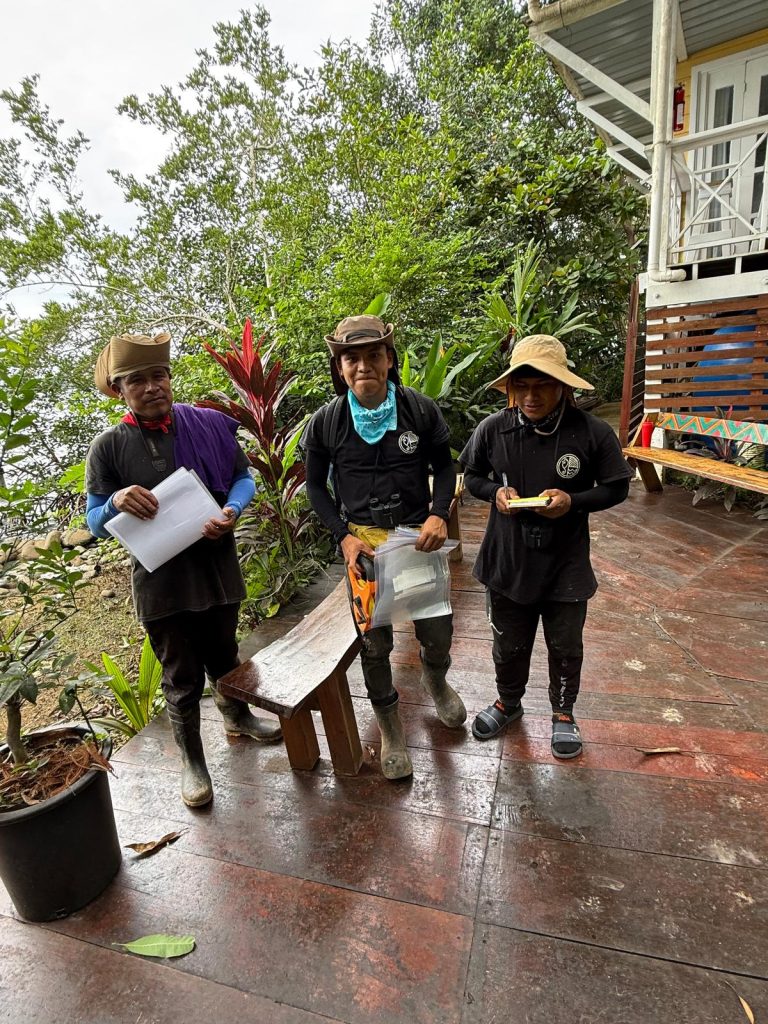
Our promise: we share Indigenous plant knowledge only with the free, prior and informed consent of the community and the people who hold it. Read our Biocultural Knowledge and FPIC Policy (PDF).
Forest of Flavours is the name of our botanic garden of Seahorse Point Nature Reserve, Isla Bastimentos, Bahía Honda, Bocas del Toro, Panama.