
Before you book, anywhere
Eight Questions Worth Asking
Almost every lodge on this coast calls itself sustainable. It costs nothing to say. From the other side of the world you cannot tell who means it, so the thing that helps is asking questions that cannot be answered with an adjective.
So here are eight. Send them to us. Send them to everyone else you are considering. Listen for whether the answer has a number, a name or a date in it. Enthusiasm is easy.
Ours are below, in full, including the parts that are not flattering.
The eight questions
- 01 Who has worked here longest, and what do they do?
- 02 What on last night’s plate was grown here, and what was bought in?
- 03 Where does your power and your water come from?
- 04 Where does what you use end up?
- 05 Can I walk the garden with someone who actually works in it?
- 06 Which community do you work with, and since when?
- 07 What does the rate include, and what will cost me extra?
- 08 What should I bring, and what should I leave at home?
Who has worked here longest, and what do they do?
Fredy Sam and Danilo Beker Brown, who joined in May 2024 as the work to regenerate this site was beginning. They have been here longer than anyone. Both live in Bahía Honda, the community next to us – Fredy came originally from the mainland, Danilo from Salt Creek at the other end of this island.
Danilo leads on construction and trained Fredy, who now works alongside him. What they have built here is to Panamanian building regulation, and the workmanship is better than we had any right to expect. Their roles keep changing as the place grows, and so does what they know.
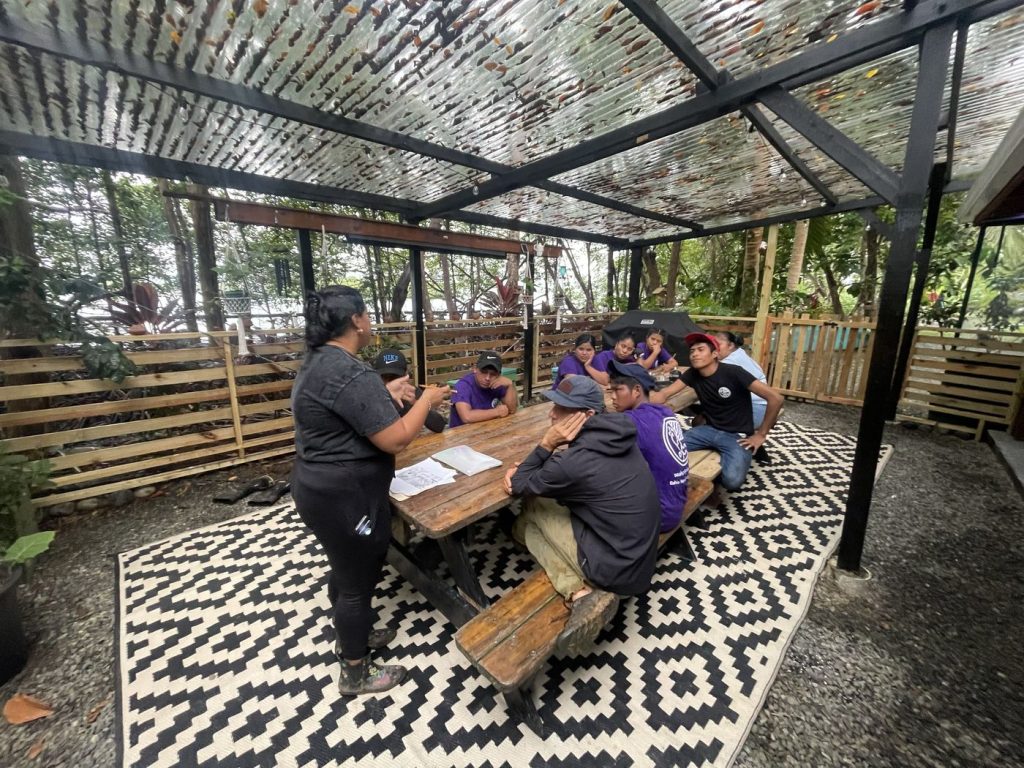
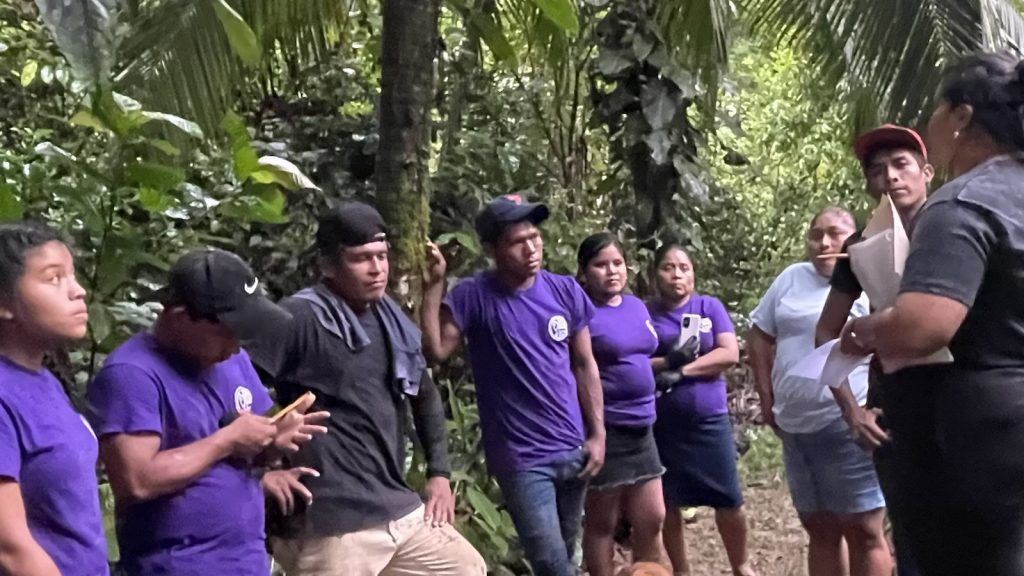
The team lives in Bahía Honda, the Ngäbe-Buglé community next to us. Four people are employed here. This year all four completed practical horticulture certificates and are now qualifying as conservation educators. A fifth – Danilo’s brother, also from Salt Creek – volunteers with us while we fund his university degree.
They are not support staff who have been taught a script. They propagate the collection, they run the sessions, and where a session uses plant knowledge that belongs to their community, they lead it and are paid to lead it.
What on last night’s plate was grown here, and what was bought in?
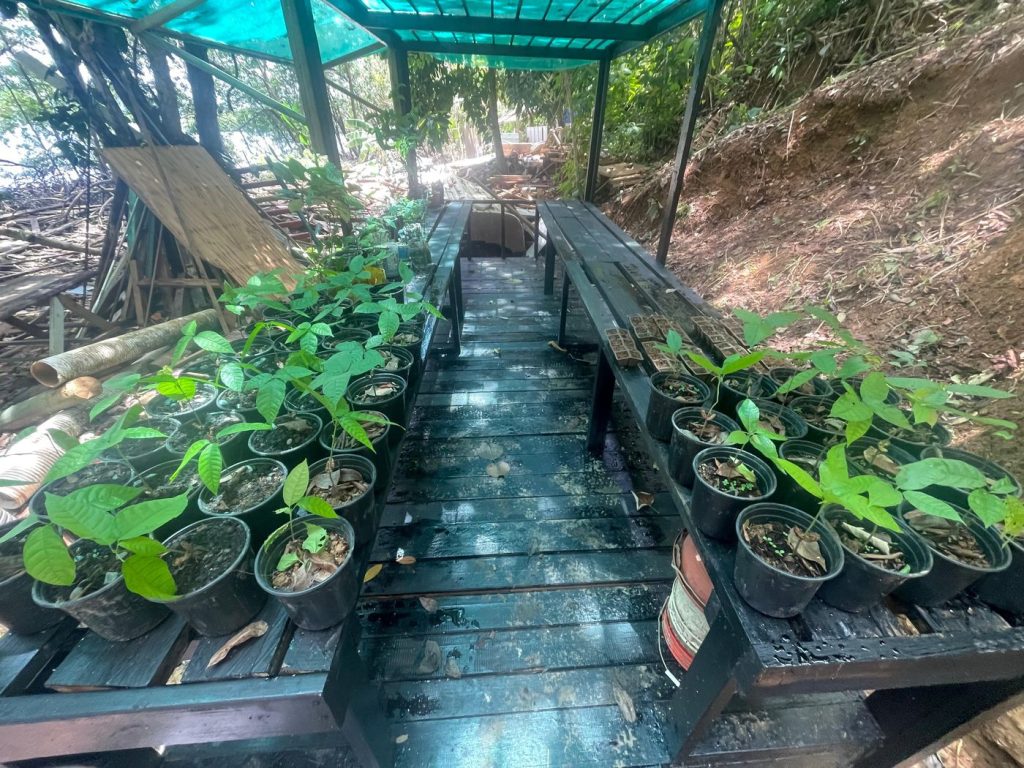
We grow in an organic community garden built for the kitchen – herbs as well as fruit and vegetables. Our oils, our hibiscus syrup and the deep blue we colour drinks with, from our own butterfly pea, are made here.
We share the rest. The white-faced capuchins and the parrots get to a good deal of the fruit before we do, and that is the arrangement. What we usually manage to pick in time: pineapples; bananas and plantains, several species; mangoes; mountain apples; avocados; melon, cucumbers and tomatoes; persimmons.
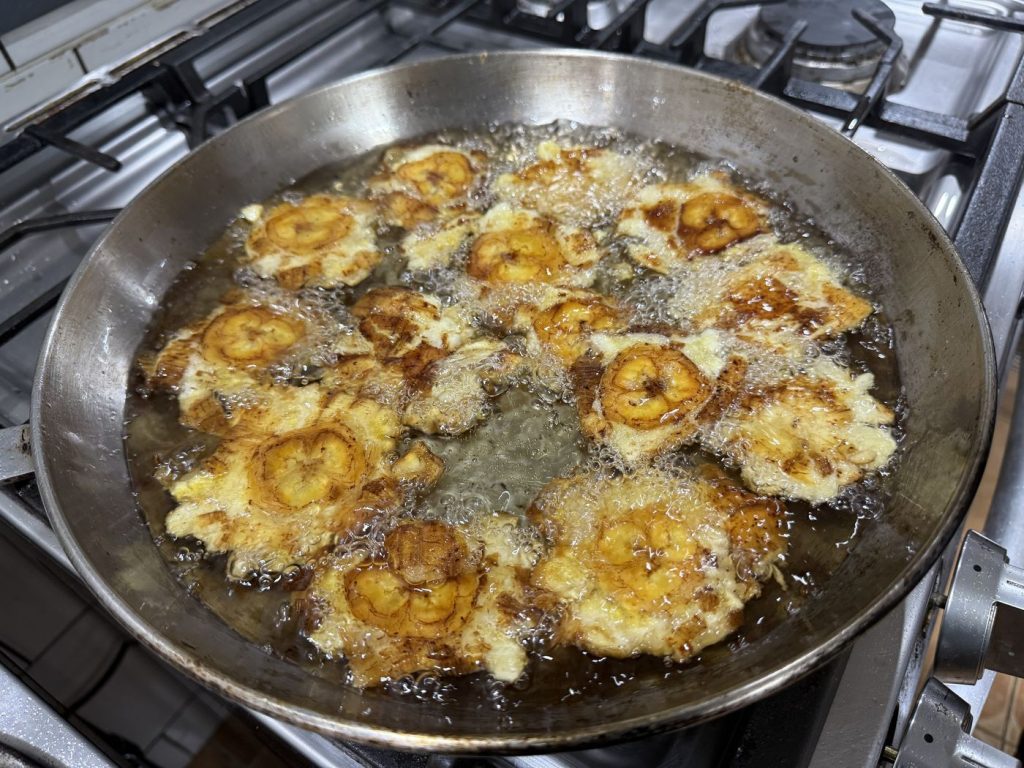
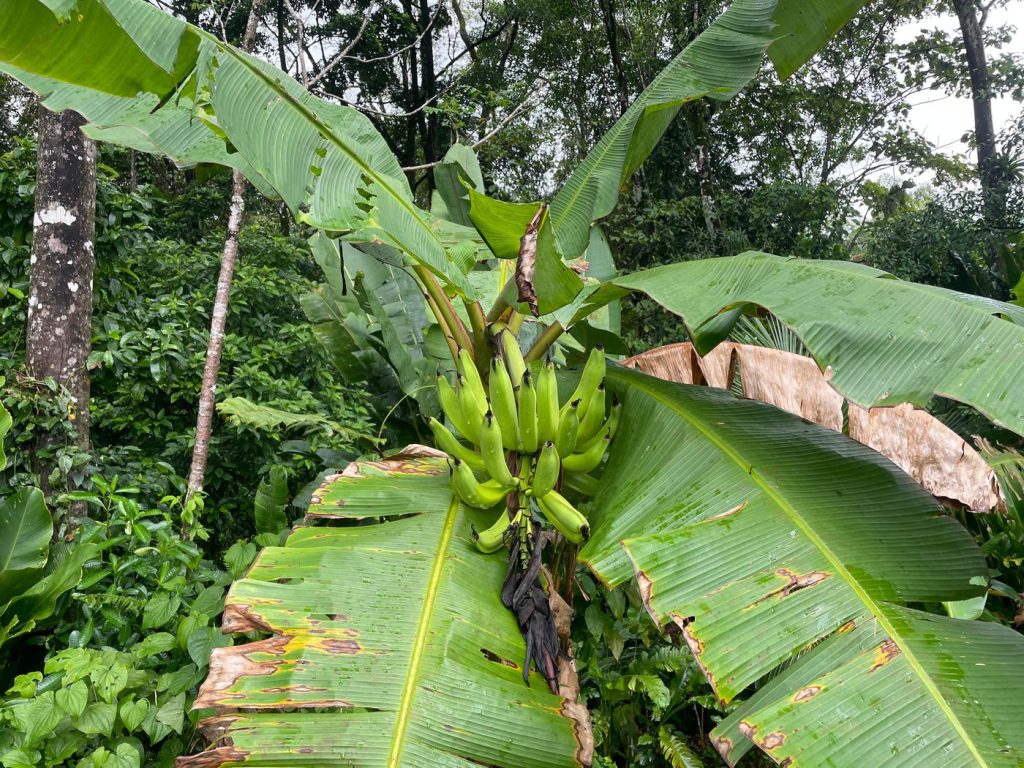

In the Harvest season, much of what reaches the table is whatever is ready that week rather than whatever was ordered.
The rest comes from the mainland: rice, flours, and Panamanian coffee. We look for organic where we can get it. Fish only where it is artisan-caught.
We do not pretend the kitchen feeds itself. No kitchen on this island does.
Where does your power and your water come from?
We are 100% off grid. All of our power is generated by solar energy, from two separate solar systems, one at the Yellow House and one at the Top House. A generator is held in reserve for when they cannot keep up.
Both systems report to an EG4 monitor, which counts the electricity they generate and works out what that saves compared with generating it from coal. In 2026 so far, to 27 October, the Yellow House has generated 5,041 kWh and the Top House 2,149 kWh, which is 7,190 kWh in all. On the coal comparison, that is about 7.2 tonnes of carbon dioxide and 2.9 tonnes of coal not burned this year. Since the systems were switched on, the total is 8,153 kWh, about 8.1 tonnes of carbon dioxide and 3.3 tonnes of coal.
Those figures come from our own EG4 monitoring, which counts 0.997 kg of carbon dioxide and 0.4 kg of coal for every kilowatt-hour of coal-fired electricity avoided. We will update them each year.
Hot water is propane, heated on demand. We are not going to call that renewable. It is gas – but nothing is kept hot waiting for you, so it burns only while a tap is running.
All our water is rain. It is collected from the roofs of the buildings and filtered on site to 0.03 micron by ultrafiltration. All drinking water is then filtered again by reverse osmosis. We hold 20,000 litres of it for drinking, and collect separately for the garden through the dry season. The roof over the growing beds does two jobs: it shelters them, and it catches the water that irrigates them. Every glass of water you drink here fell on this hill.
We do not allow plastic bottles of water on site. Bring a refillable bottle, and we will fill it.
Where does what you use end up?
This is the question we have thought about hardest. This land drains straight into mangrove, seagrass and reef, so what we put on the ground ends up in the water.
Our own marine research found that a product widely recommended for organic pest control interfered with the moulting of copepods – the plankton living in the water below us, and the same plankton we put under a microscope for visitors. “Approved for organic use” does not mean “harmless in salt water”. We now work to a reef-safe input standard that goes beyond organic certification, and we keep our own list of products that are acceptable on land but not beside this ocean.

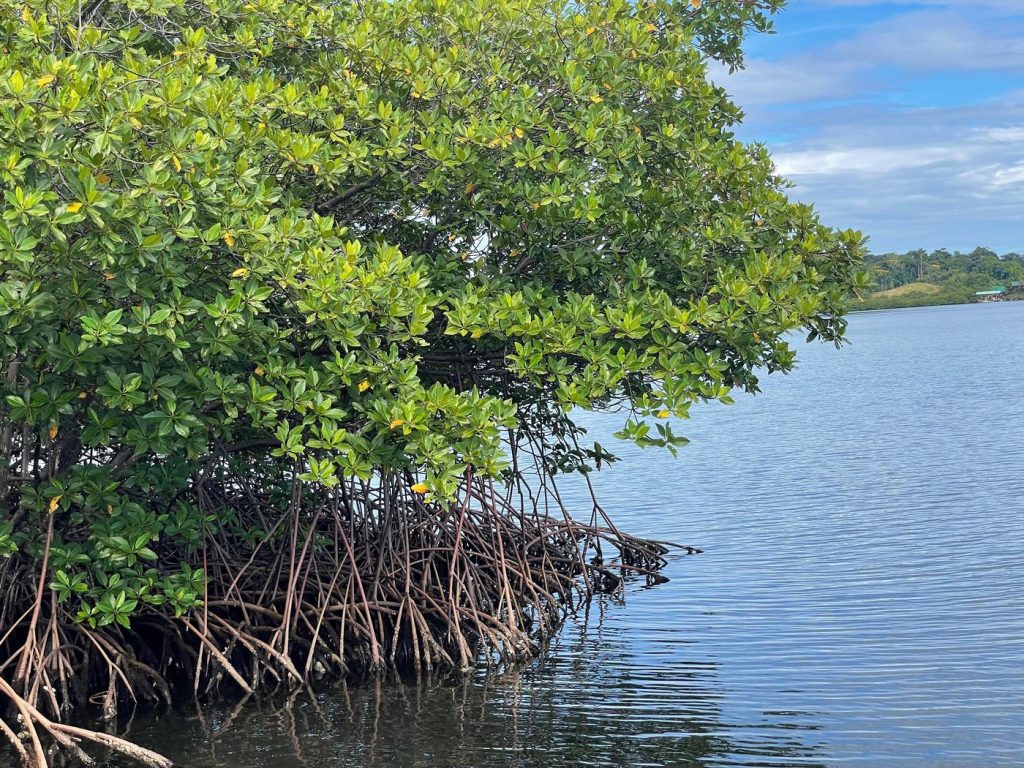
We make our own plant repellents, from chilli, garlic and tomato. We make our own washing powder and dishwashing liquid, and we clean with vinegar, bicarbonate of soda and lemon. We do not use something here just because it is sold as green somewhere else.
Recycling is the hard part, and anyone on this coast who tells you otherwise is not being straight with you. Here is where things actually go:
- Aluminium – collected for the local school, who raise funds from it.
- Paper and cardboard – composted. Heavily inked paper does not go on the compost and leaves the site instead; those inks are too toxic for mangrove, seagrass and coral.
- Food waste – composted, or turned into plant feed.
- Glass – ground down and used in concrete, or as a soil improver.
- Large appliances – taken by a registered solid waste agent for scrap metal recycling or licensed disposal.
Our own plastic is mostly large containers rather than small ones. We buy in bulk, which cuts the packaging and the number of boat trips at the same time, and we work at keeping single-use plastic out of the place altogether. What does arrive gets used until it falls apart, and then used again – for planting out tree saplings, as mini greenhouses for seedlings, for storing the diluted plant feed we make, for mixing and keeping our linseed oil and borax wood treatment, for making natural insect repellent, and for holding screws, nails and small plumbing fittings.
Then there is the plastic that arrives by sea. Twice a week we clear the mangroves. What comes out is mostly crocs, flip-flops, water bottles and bottle caps, in quantities that are hard to describe to anyone who has not stood in it. It is collected and sent for recycling. None of it is ours. It arrives anyway.
Water leaving the buildings is dealt with in two ways. Our own house runs to a septic tank and soakaway. The lodge’s greywater goes into a reed bed wetland, which treats it and lets it go slowly rather than all at once. Given what this land drains into, slowly is the whole point.
A reed bed is a living thing, and it only works if what reaches it is not poisonous. That is why the cleaning cupboard holds vinegar, bicarbonate and lemon rather than anything with a warning label on the back – and why what you wash off yourself matters here too.
Can I walk the garden with someone who actually works in it?
Yes. That is the visit.
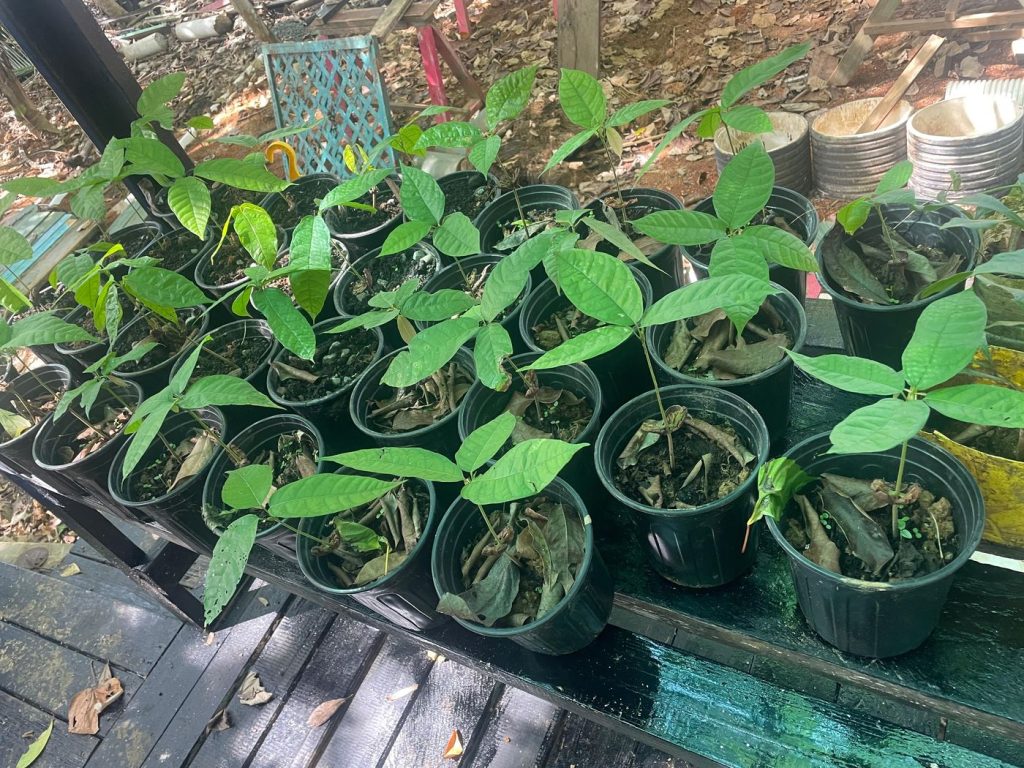
You will be shown the collection by the people who look after it. We are a registered botanic collection – institutional member 6206 of Botanic Gardens Conservation International, listed on GardenSearch (opens in a new tab) as 7274 – holding 205 documented accessions across some eighty plant families, over a hundred of them native and growing where they always have.
Six are tree species on the IUCN Red List, identified here by Lider Sucre, formerly IUCN Councillor for Mesoamerica. A seventh Red List species lives in the water off the point.
We also leave you alone when you want to be left alone. There are self-guided routes, and you will not be followed around your own holiday.

Which community do you work with, and since when?
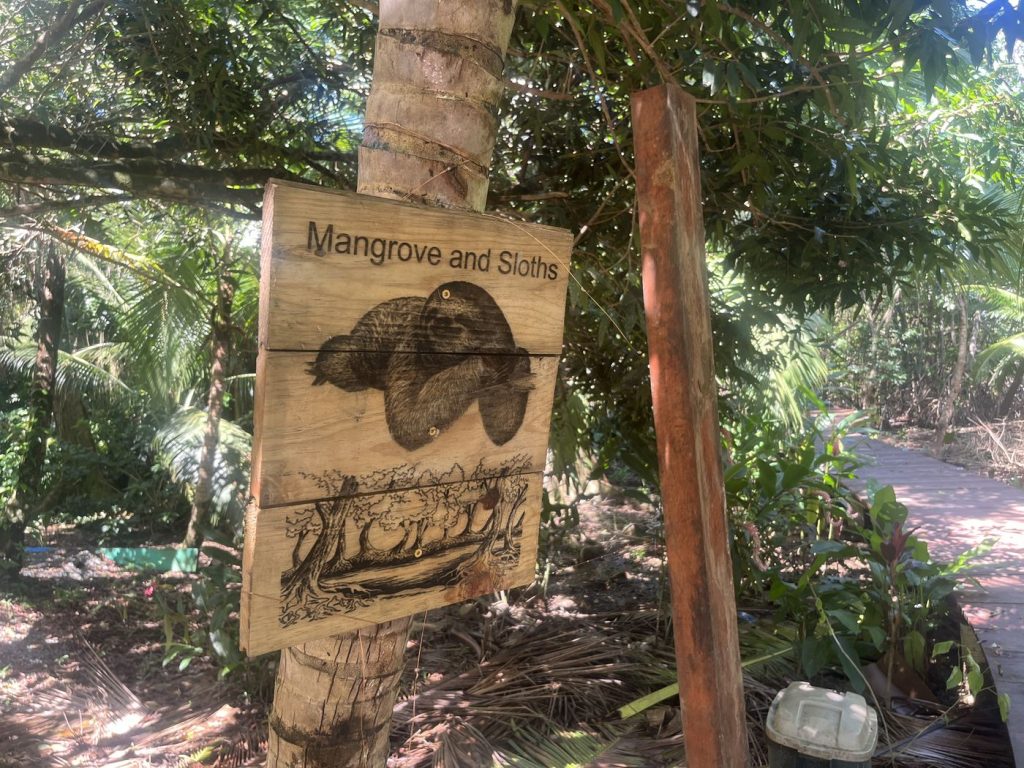
Bahía Honda. They are our neighbours and our colleagues, not a project we visit. The work is not an outreach programme bolted on to the side of a hotel; it is simply what goes on here most weeks.
The people came first. Fredy and Danilo joined in May 2024, when the regeneration began. The community garden is much newer – 2026, once the buildings were refurbished, the ground was cleared and the infrastructure was in. We would rather give you that date than round it back a few years.
Once a month, when the forecast allows the boats, we run horticulture classes. We supply rice to the local school, and juices and other things for celebrations. Banana muffins, when the monkeys allow us a surplus. The school also takes our aluminium and raises funds from it.
Where our work uses traditional plant knowledge, that knowledge is credited to the community it comes from under a signed consent policy, and the people who hold it are paid to lead the sessions that use it. We are funding one university degree. If the trade here becomes strong enough, the next thing we fund is the training of a Panamanian biologist.
None of this has been grant funded. It has been paid for out of what we earn.
What does the rate include, and what will cost me extra?
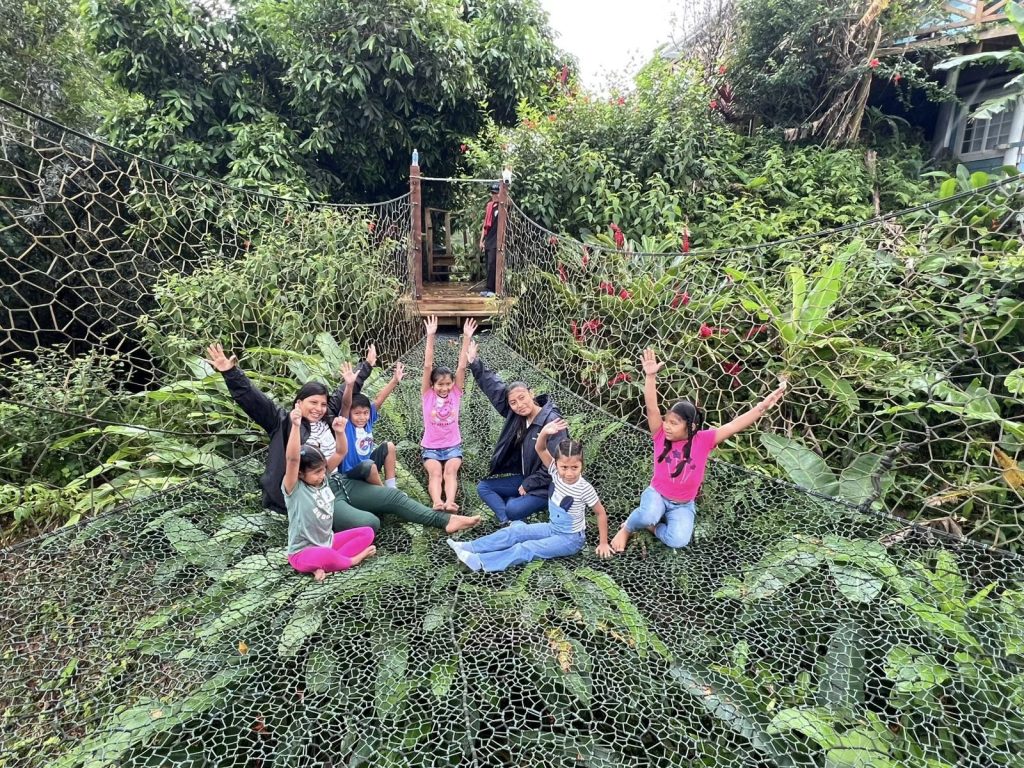
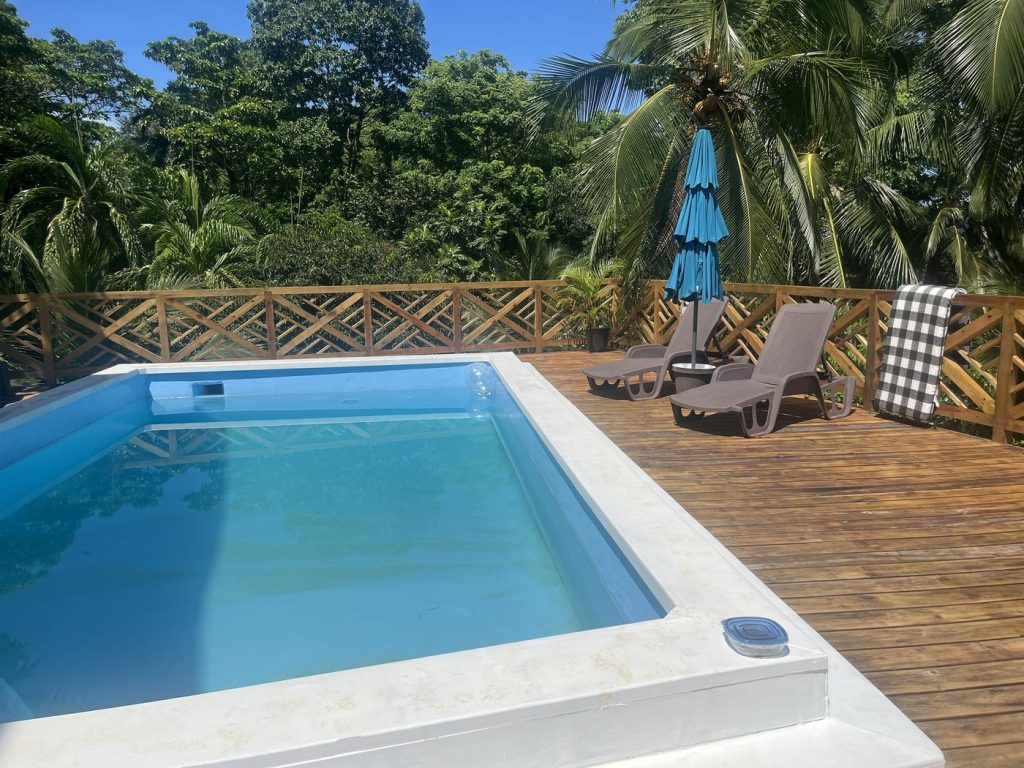
Your stay is half board and priced per person. It covers your room, breakfast and dinner, and the boat from Bocas Docks. You also have the run of the reserve: the self-guided routes, the trails and mangrove walkways, the tree net, the kayaks and the pool.
Things that cost extra, stated plainly:
- Guided tours, the wine tasting and other activities that carry a charge. Hotel guests get 20% off all of them.
- Trips away from us – Zapatillas and the longer boat journeys – carry a surcharge, and the national marine park fee is not ours to waive.
- The wine tasting and the tamales must be booked before you arrive. Both are cooked for a whole table, so we need notice.
- Panamanian sales tax (ITBMS) is added on the invoice at the statutory rate for each line. We quote before tax rather than hiding it inside the number.
Everything else – the trails, the mangrove walkways, the pool, the dock, dinner in the Heliconia Lounge – is part of being here.
What should I bring, and what should I leave at home?
Bring closed shoes you do not mind soaking, a dry bag, binoculars if you own them, and curiosity about things smaller than a sloth.
On what you wash off. There are natural soaps and toiletries in the bathroom. Use them, or bring your own – that is your choice and we are not going to stand over it. We raise it at all because everything washed off here goes into the reed bed and then into ground draining towards the seagrass, so it is worth a thought before you pack. Sunscreen is the one we would ask you to think hardest about, and we will gladly tell you what is safe in this water.
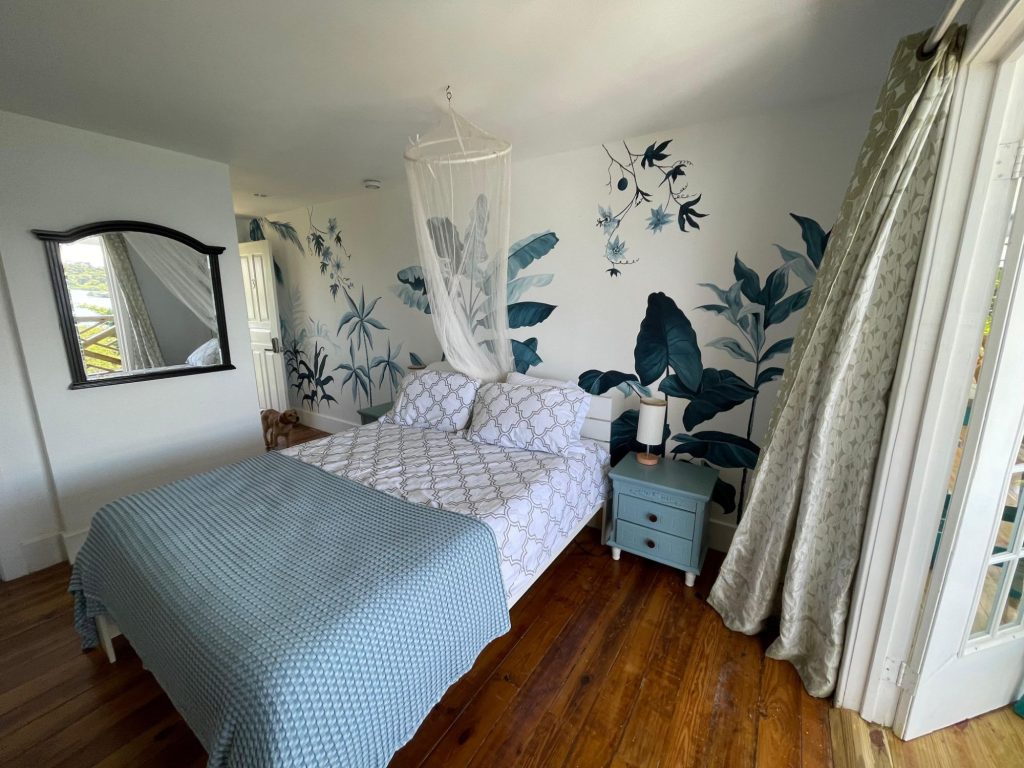
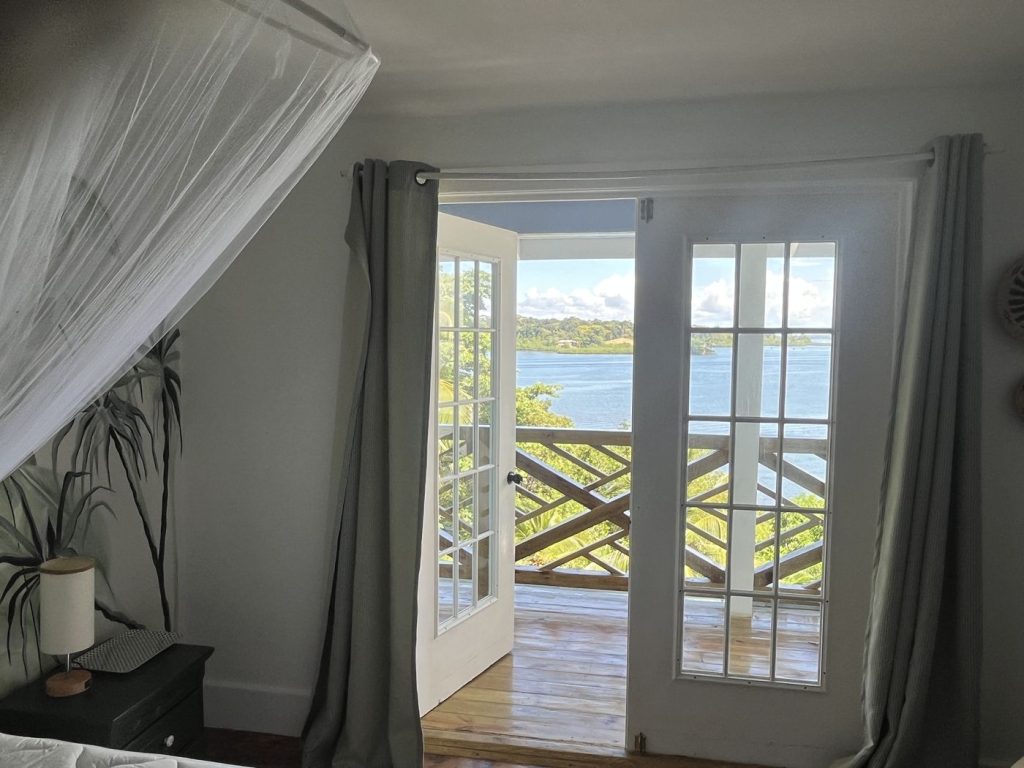
Leave at home the expectation of air conditioning. We do not have it. We have fans over the beds, nets, and a hill that catches the Bahía Honda breeze – and mosquitoes, for all their reputation, are very poor fliers.
Pro tanto quid retribuamus.
What return shall we make for so much?
The motto of the city of Belfast, which carries a seahorse on its arms, and which we have taken as our own. It is a fair question to ask of anywhere that charges for time on a coastline.
Forest of Flavours at Seahorse Point Nature Reserve
Isla Bastimentos, Bahía Honda, Bocas del Toro, Panama