
This post was first published in September 2023, and we corrected it on 4 October 2026 so that it matches our current reports.
Carbon dioxide is very important for the climate, because rising carbon dioxide in the air is a main driver of the warming of the planet. It is also very important for the ocean, because the sea absorbs carbon dioxide from the air, and rising carbon dioxide lowers seawater pH and carbonate ion concentration, which reduces aragonite saturation.
Cutting carbon dioxide emissions is very important for the climate and for limiting ocean acidification. It would not, on its own, remove the black carbon, persistent pollutants that dissolve in fat, and plastic that are already in the ocean, or repair any damage to the microlayer, the thin skin at the surface of the ocean, because those materials act through biogeochemical and ecotoxicological pathways that are distinct from those of carbon dioxide.
Most people now live a life insulated from nature, don't think it really matters, or don't appreciate or understand the importance of life on earth. In order for the planet to be sustainable, humanity must be in balance with the rest of nature. Over the last 70 years, this has definitely not been the case; we have destroyed ecosystems, employed destructive farming and fishing, and now we are polluting the land and the sea with toxic chemicals, plastic, and partially combusted carbon.
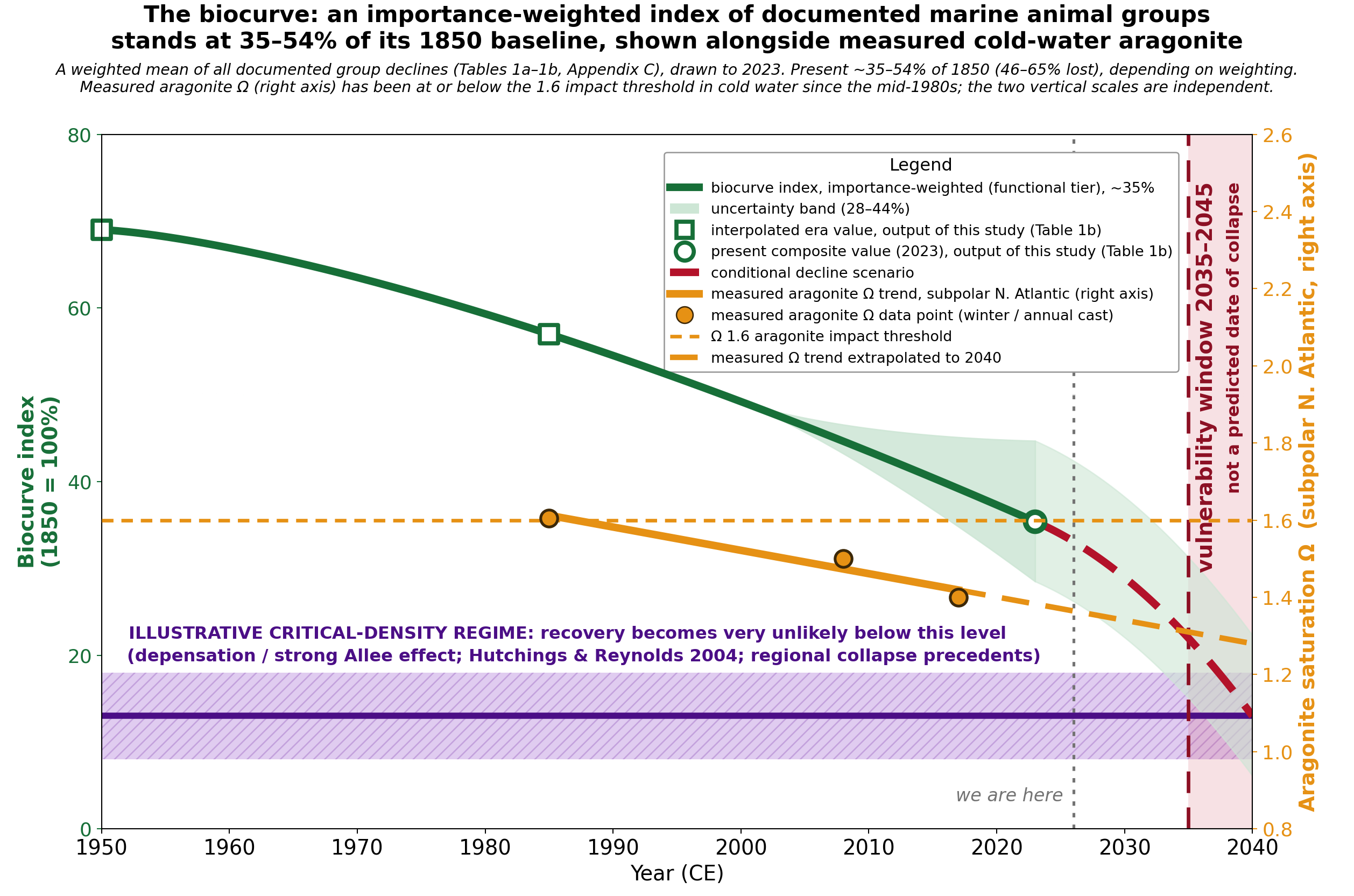
Carbon dioxide is not the only stress on marine life. An interpretive synthesis of documented declines places marine animal life at about 35 to 54% of its 1850 level, and most of that loss was recorded before acidification became a factor, so acidification, which rising carbon dioxide drives, is now acting on a system that fishing, whaling, habitat loss, pollution and climate disruption had already depleted.
Our plankton paper, a preliminary survey that was under review at the journal Ocean Science in October 2026, suggests that reducing marine pollution may protect the biological productivity of the ocean and may support ecosystem recovery in a way that complements cutting carbon dioxide emissions, although the survey itself did not test this idea.
Our reports are described on the climate change page, which links to the Research Square preprint and the EGUsphere preprint, and on 4 October 2026 neither report had completed peer review.
Stark, powerful and brutal truth. Just so stupid of humanity to knowingly continue to destroy every part of the earth. The air, the water, the land - all hammered by humans believing there is no end to what we can inflict.
For a species that considers itself so smart, how could we have been so foolish?
Gary
Hi Gary, Agreed, it is depressing and the latest news isnt getting any better; https://seahorsepoint.org/2023/09/15/over-human-population-this-is-not-a-problem/
However there are solutions that can turn it around, they just need to be implemented and that is now our focus.